

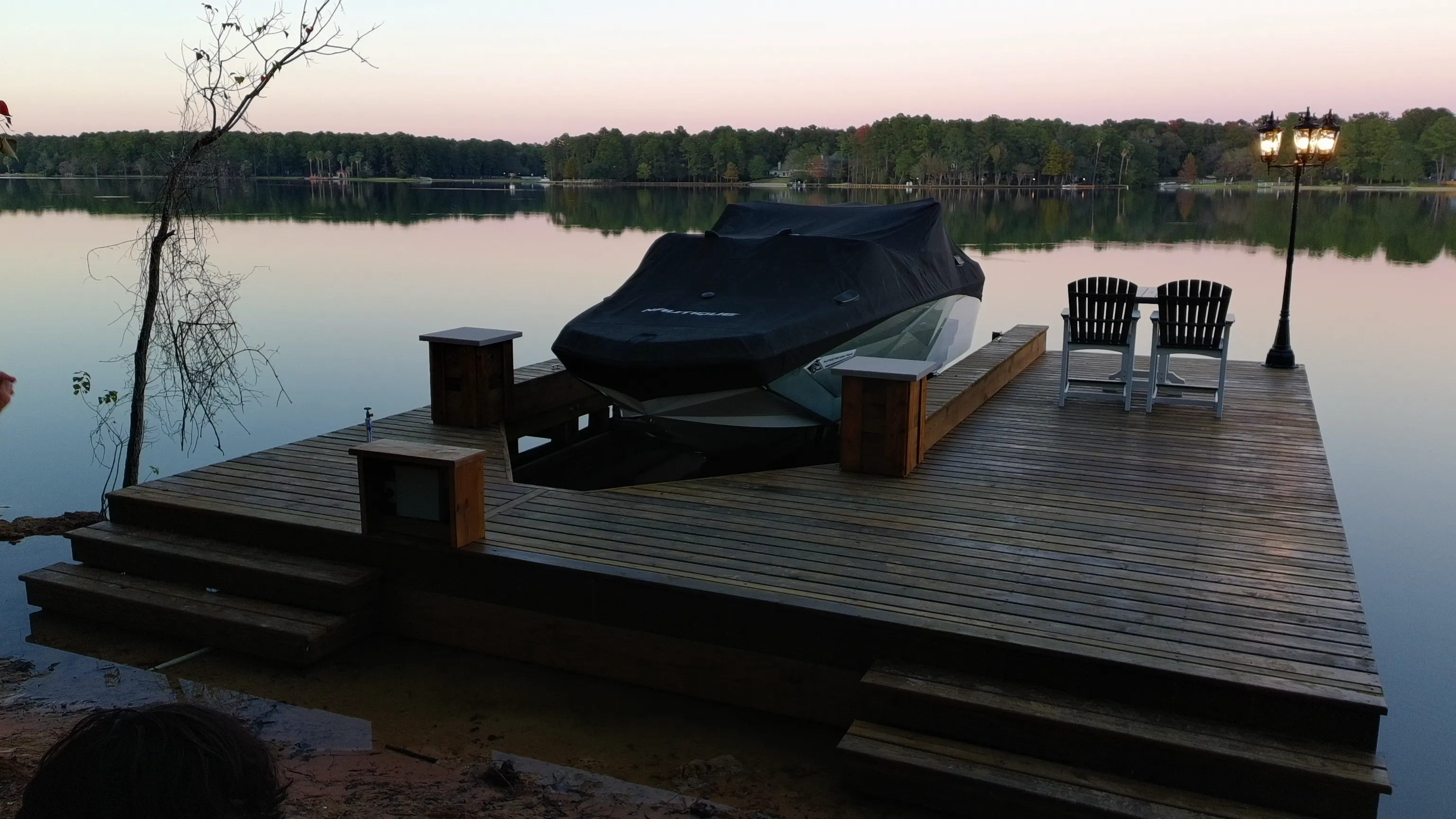
A boat house protects your watercraft from sun, storms, and weather while adding lasting value and architectural character to your waterfront. Jordan Marine Construction builds custom boat houses across Lake Conroe, Lake Livingston, Clear Lake, and the greater Houston coast, integrated with the dock and lift so the whole structure works as one.
From classic covered slips to fully enclosed boat houses with timber-truss roofs, decking, and storage, we engineer each build for your boat, your shoreline, and the way your family uses the water.
Request Your Free EstimateOur Boat Houses Process
-
Design Consultation
We size the structure to your vessel and lift, confirm roof style and clearance, and integrate the boat house with your existing or new dock.
-
Engineered Plans & Permitting
You receive detailed drawings and material specs, and we coordinate permits with the controlling lake or coastal authority.
-
Pilings & Structure
We drive marine-grade pilings and frame the structure to carry roof and lift loads in marine wind conditions.
-
Roof, Lift & Finish
We install the roof system, integrate the boat lift, and finish with decking, trim, and optional lighting or storage.
Materials & Treatment Specifications
Boat houses are built with marine-grade pilings and structural timber treated for the environment — 2.5 CCA for saltwater, .60 for freshwater, .40 for land use. Roof systems can incorporate heavy timber trusses for a finished interior look, and all hardware is hot-dip galvanized or stainless for corrosion resistance.
Why Boat House Construction Is Structural Work, Not Carpentry
A boat house is a roofed building standing on pilings over open water, holding a multi-ton vessel on a lift, in a region that takes direct hurricane hits. That makes it a structural engineering problem before it is ever a carpentry project. Roof loads, lift point loads, wind uplift, and wave action all travel down through the framing into the pilings — and if any link in that chain is undersized, the failure shows up in the worst possible conditions.
We engineer boat houses as one integrated structure: pilings driven to refusal and sized for the combined roof and lift loads, framing with correct load paths to every lift mount, and roof systems — from simple covered slips to heavy timber-truss roofs — built to resist uplift in Gulf Coast wind events. Because we install the dock, the lift, and the boat house together, clearances and alignments are right the first time.
Timber treatment is matched to the water: 2.5 CCA for saltwater and brackish exposure, .60 CCA for freshwater lakes like Conroe and Livingston, with hot-dip galvanized or stainless connectors throughout. That is the difference between a boat house that needs structural repair in ten years and one your kids inherit.
Design Options: Covered Slips, Enclosed Boat Houses & Sun Decks
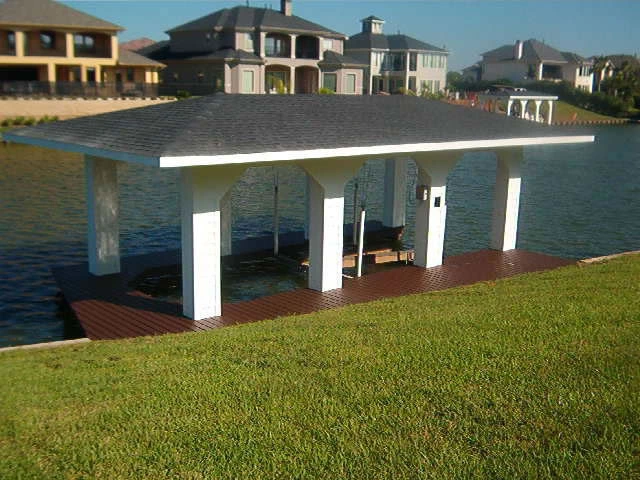
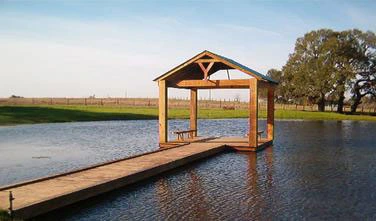
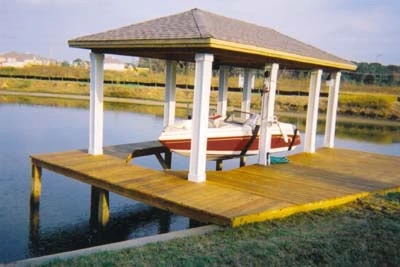
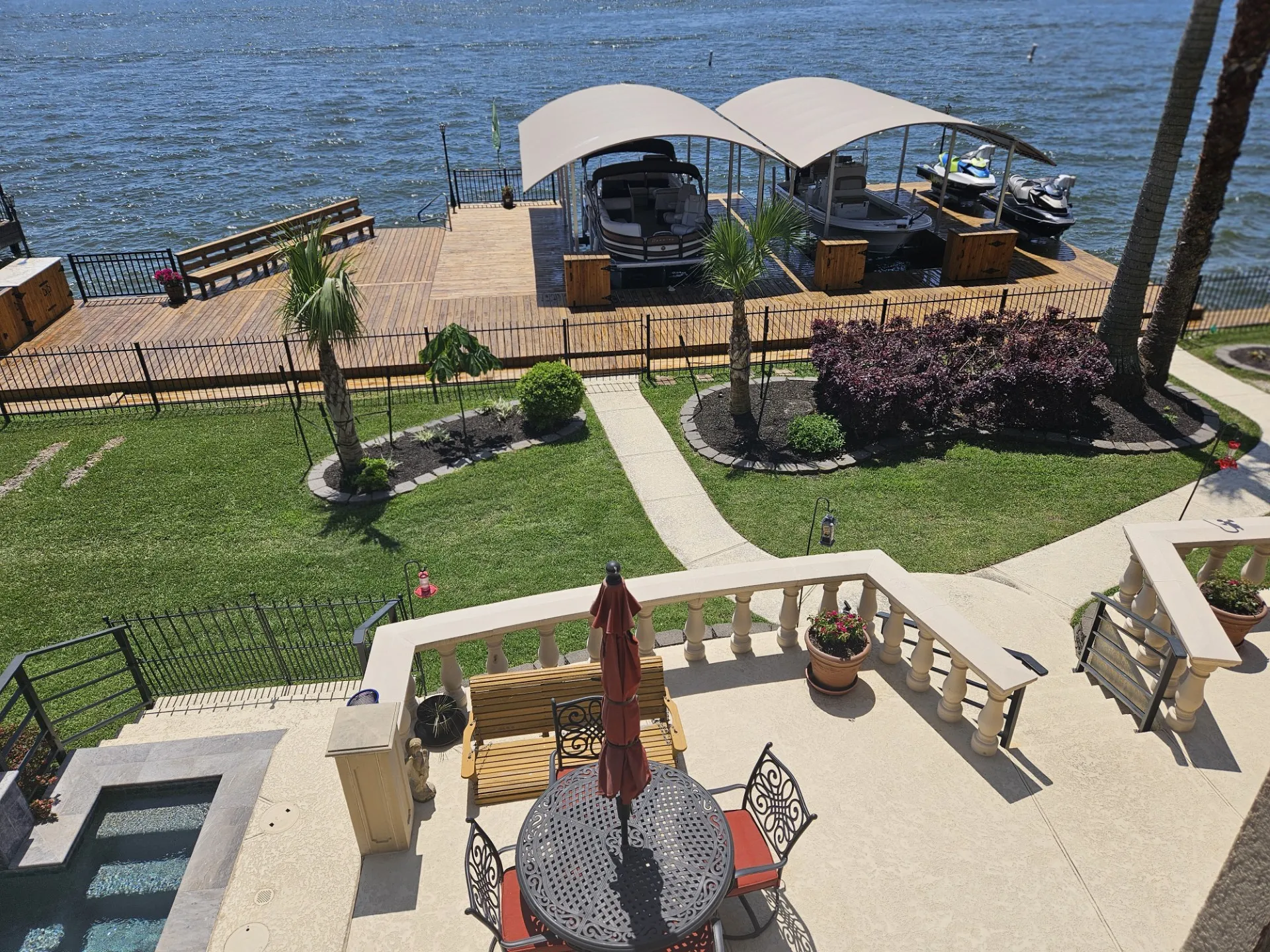
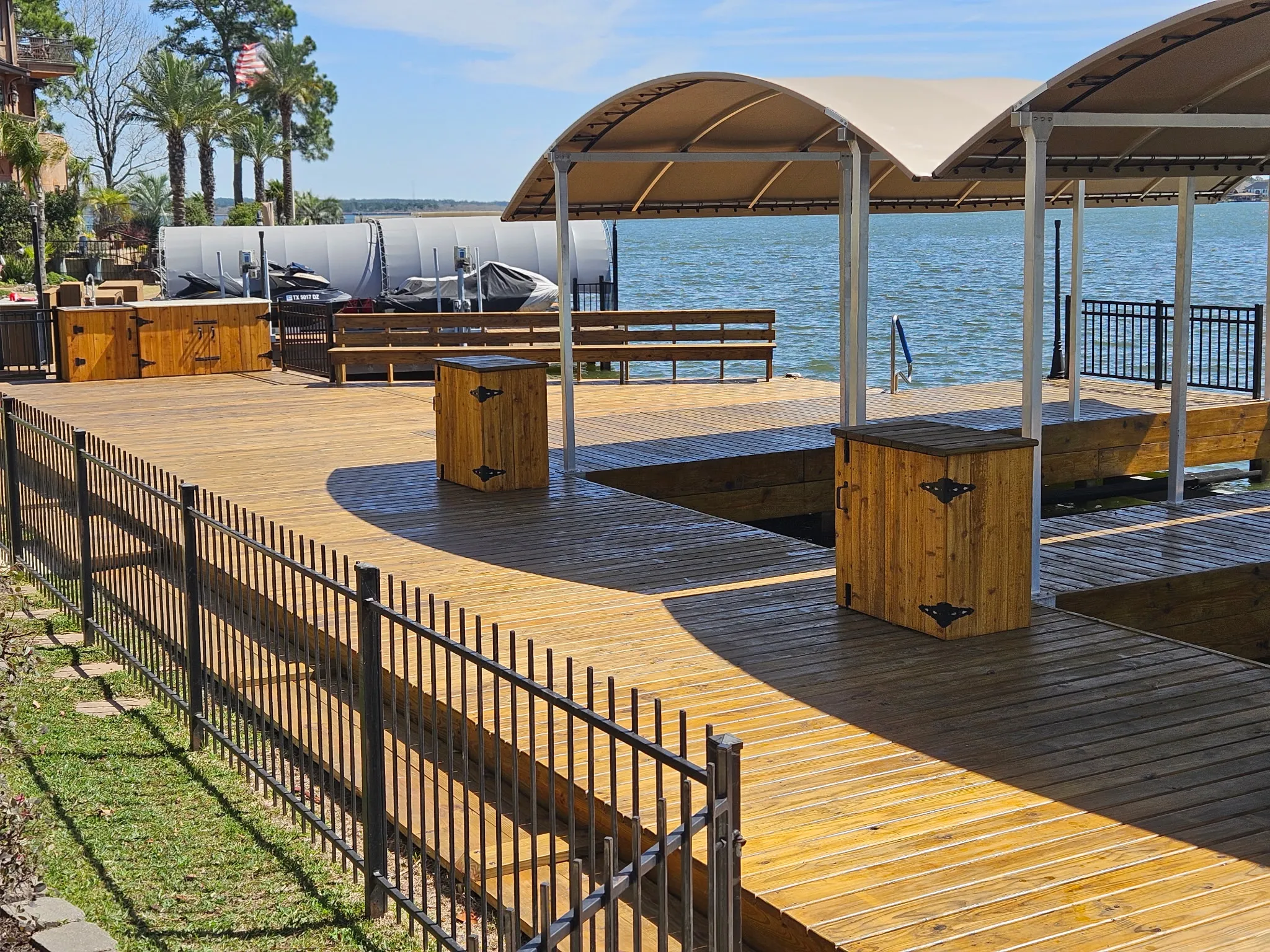
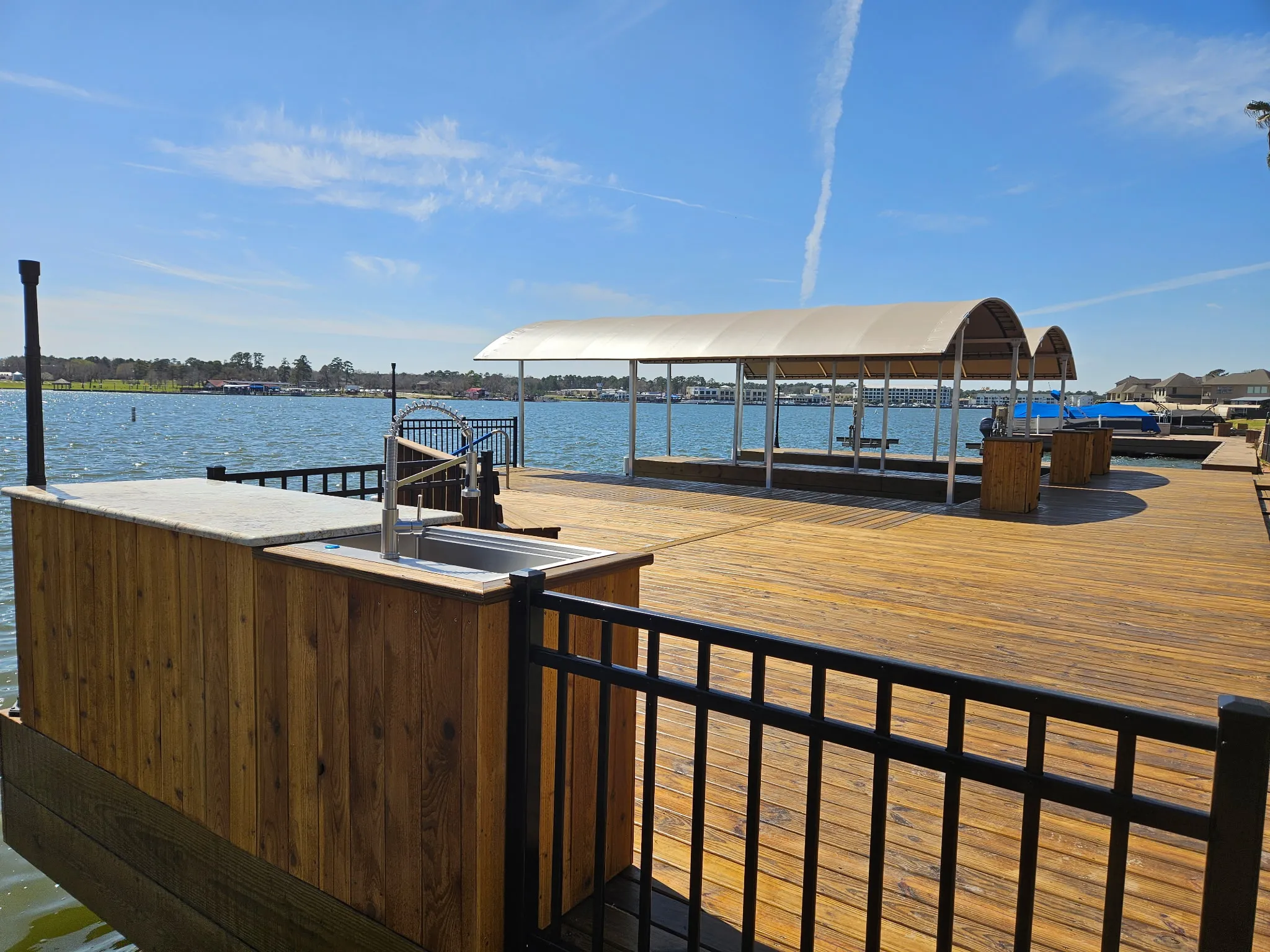
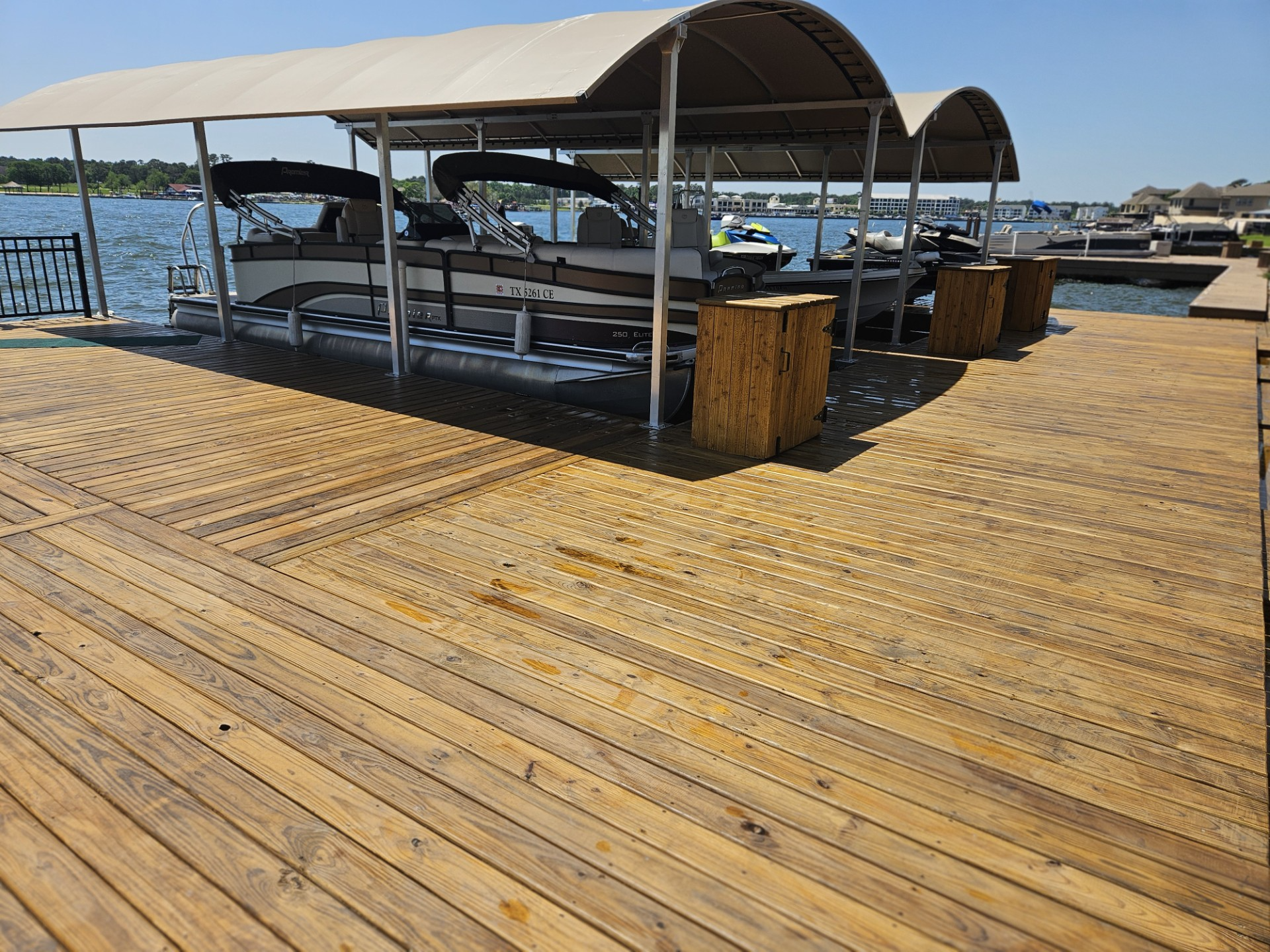
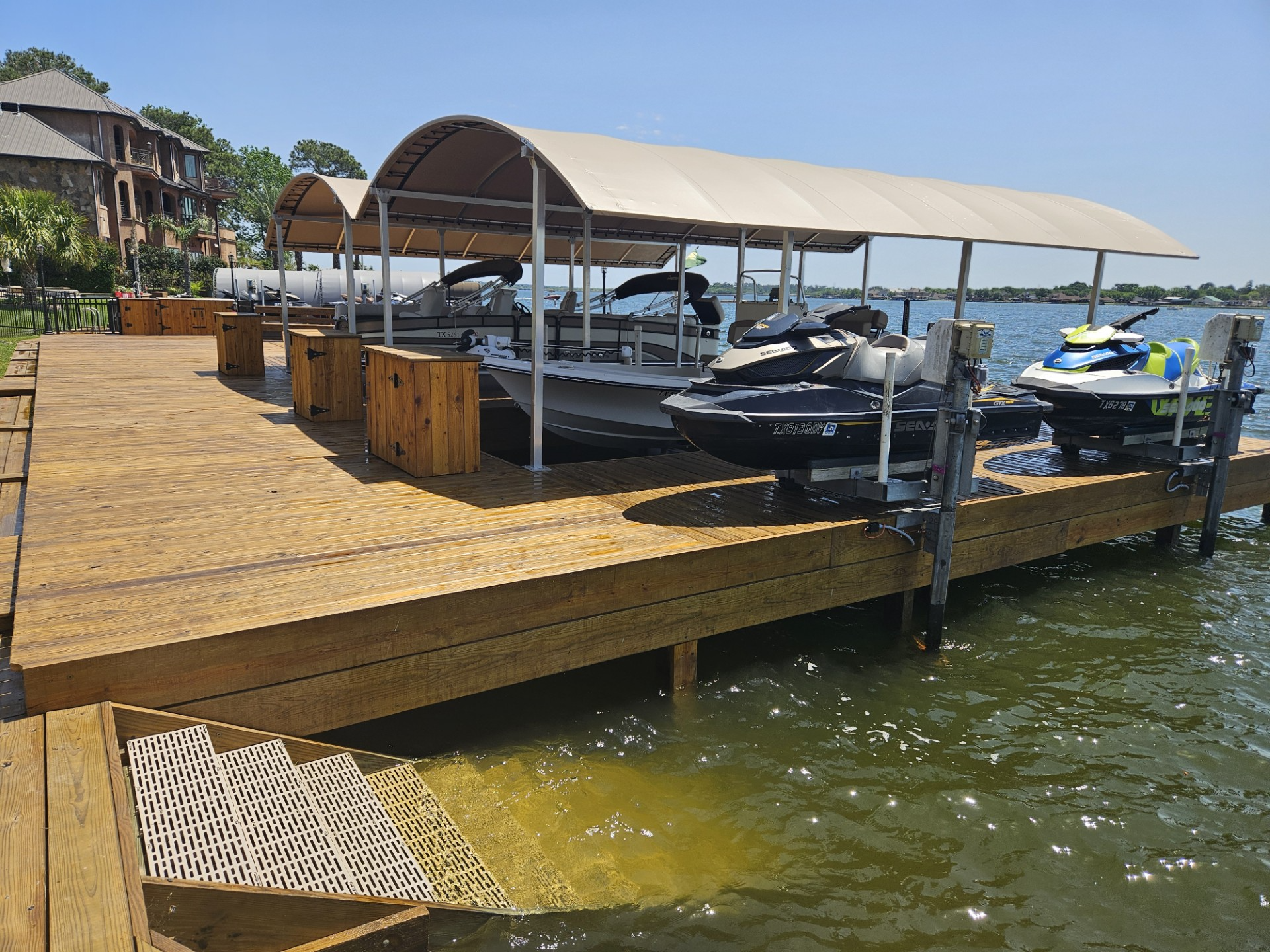
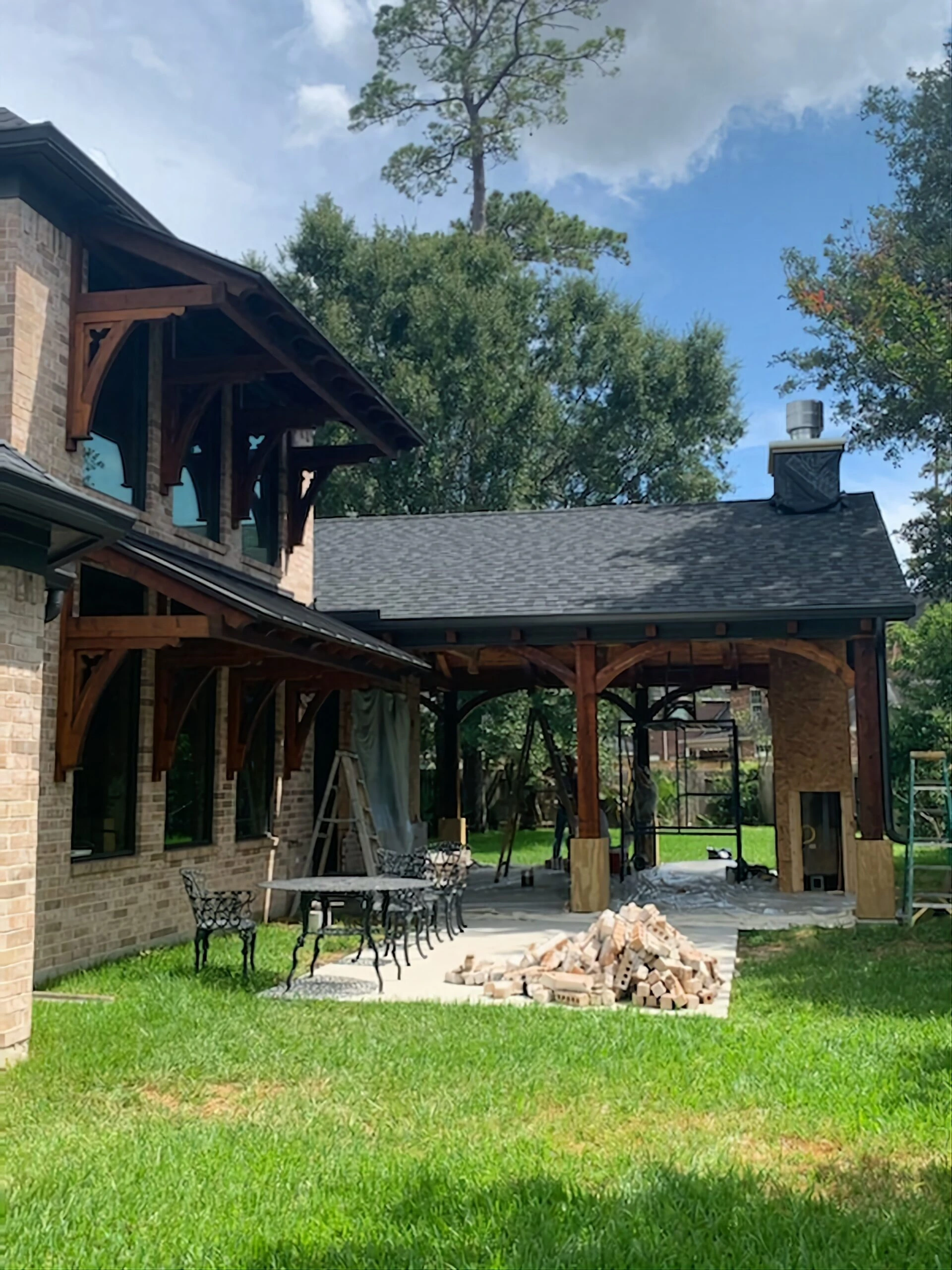
The simplest configuration is an open covered slip — a roof over the lift that keeps sun and rain off the boat, which alone dramatically slows gelcoat fade and upholstery wear. From there, options scale up: enclosed boat houses with walls and storage for gear and tackle, double- and multi-slip layouts for boats plus PWCs, upper-level sun decks with railings, and timber-truss roof interiors that turn the structure into a genuine architectural feature of the property.
Roof style is both aesthetic and structural. We match pitch and material to the main residence where owners want visual continuity, and we size clearance height around your boat's hardtop, tower, or wakeboard rack — measured with the boat on the lift at full rise, a detail that gets missed surprisingly often when lifts and roofs are built by different contractors.
On Lake Conroe, boat house dimensions and placement are reviewed under SJRA permitting; similar rules apply through the TRA on Lake Livingston and the City of Houston on Lake Houston. We design within the controlling authority's envelope from the first sketch so the permit process doesn't force a redesign.
What a Boat House Protects — and What It Returns
Texas sun is the quiet destroyer of boats. UV breaks down gelcoat, vinyl, and canvas year-round, and a boat stored on an open lift bakes through every summer. A roof over the slip slows all of it, cuts cleaning and detailing frequency, and keeps rain out of the bilge. Combined with a lift that holds the hull out of the water, a boat house is the closest thing to garage storage a waterfront boat can get.
It also returns value beyond the boat. A well-built boat house is one of the most visible improvements on a waterfront lot, and appraisers and buyers on lakes like Conroe treat covered, lifted slips as a premium feature. Structures we build are designed so future additions — a second lift, a PWC port, a deck level — can be added cleanly rather than grafted on.
Related Projects
Where We Build Boat Houses
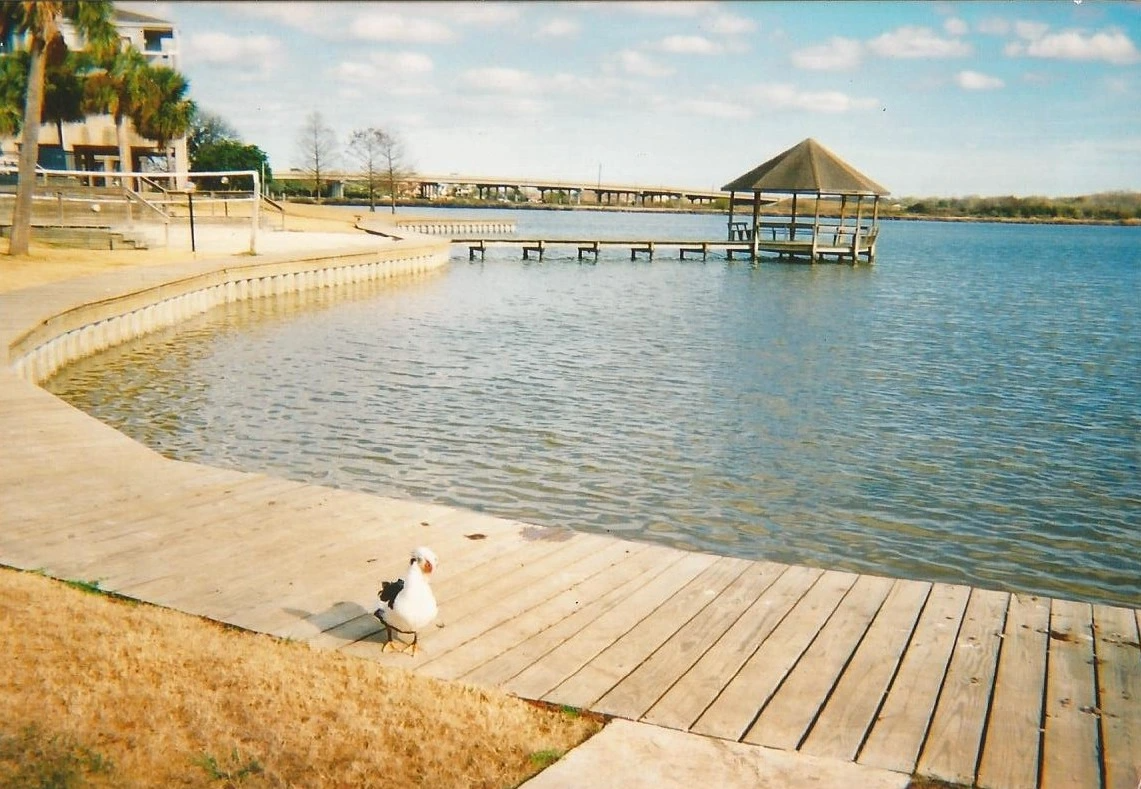
We build boat houses for waterfront communities across Greater Houston, Lake Conroe, Lake Livingston, and the Texas Gulf Coast. A few of the areas we serve:
Don't see your area? View all service areas or contact us.
Boat Houses FAQs
Can you build a boat house over my existing dock?
In many cases yes, provided the existing pilings and framing can carry the added roof and lift loads. We assess the structure first and reinforce or rebuild only where needed.
What roof options do you offer?
From simple covered slips to enclosed boat houses with heavy timber-truss roofs. We match the style to your home and budget.
Do you integrate the boat lift?
Yes — we install lifts and boat houses together so clearance, alignment, and load paths are correct the first time.
How much does a boat house cost to build?
Cost scales with slip count, roof style, enclosure level, and the foundation work required — a single covered slip on existing sound pilings is a very different project from a new two-slip boat house with a timber-truss roof and sun deck. We provide free itemized estimates so you can compare configurations before deciding.
How tall should a boat house be?
Clearance is measured from the water to the lowest roof member with your boat on the lift at full rise — including hardtops, towers, and antennas. We size roof height around your actual vessel plus a margin, and around the controlling authority's height limits where they apply.
Do I need a permit for a boat house on Lake Conroe?
Yes. On Lake Conroe the SJRA permits over-water structures including boat houses, reviewing dimensions, setbacks, and placement. Lake Livingston goes through the TRA, Lake Houston through the City of Houston, and coastal structures through USACE/GLO. We handle permitting as part of every project.
Can a boat house survive a hurricane?
No structure is hurricane-proof, but engineering makes an enormous difference. Pilings driven to refusal, uplift-rated connections, and correctly sized roof framing are what keep boat houses standing through tropical storms and hurricanes. Much of our repair work after storms is on structures that lacked exactly those details.
Open covered slip or fully enclosed boat house — which is better?
An open covered slip delivers most of the protection (sun and rain) at lower cost and stays breezier in summer. Full enclosure adds security, gear storage, and a finished look. Many clients start with a covered slip designed so walls and storage can be added later.
Related Services
Get a Free Boat Houses Estimate
Tell us about your project and we'll provide a detailed, no-obligation estimate. Serving Greater Houston, Lake Conroe, Lake Livingston, and the Texas Gulf Coast.