

When your shoreline demands maximum strength, a steel bulkhead delivers. Jordan Marine Construction builds engineered steel bulkheads across Lake Conroe, Lake Livingston, Clear Lake, and the Houston Gulf Coast to protect high-value waterfront from erosion, wave action, and soil loss.
Steel offers unmatched structural capacity for tall walls, high-energy shorelines, and commercial or HOA applications. We engineer and install each wall for the soil, water, and load conditions of your specific site.
Request Your Free EstimateOur Steel Bulkheads Process
-
Shoreline & Soil Assessment
We evaluate bank height, soil type, water depth, and wave exposure to engineer the right wall.
-
Engineered Design & Permitting
We design the bulkhead — sheet selection, embedment, tie-backs and whalers — and coordinate permitting with the controlling authority.
-
Driving & Wall Installation
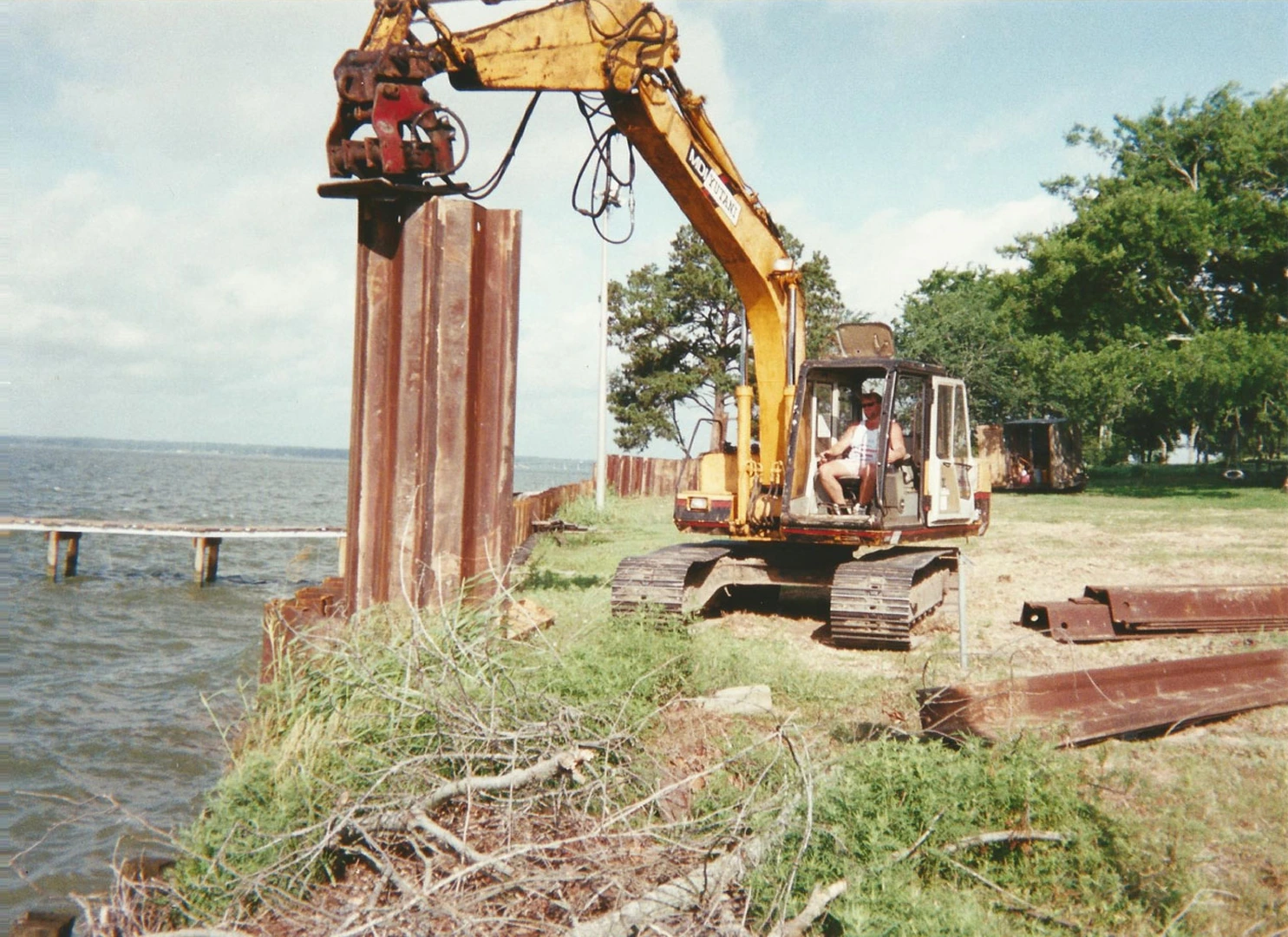
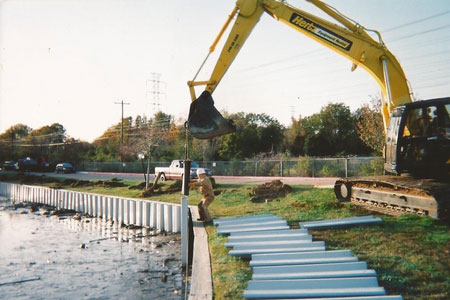
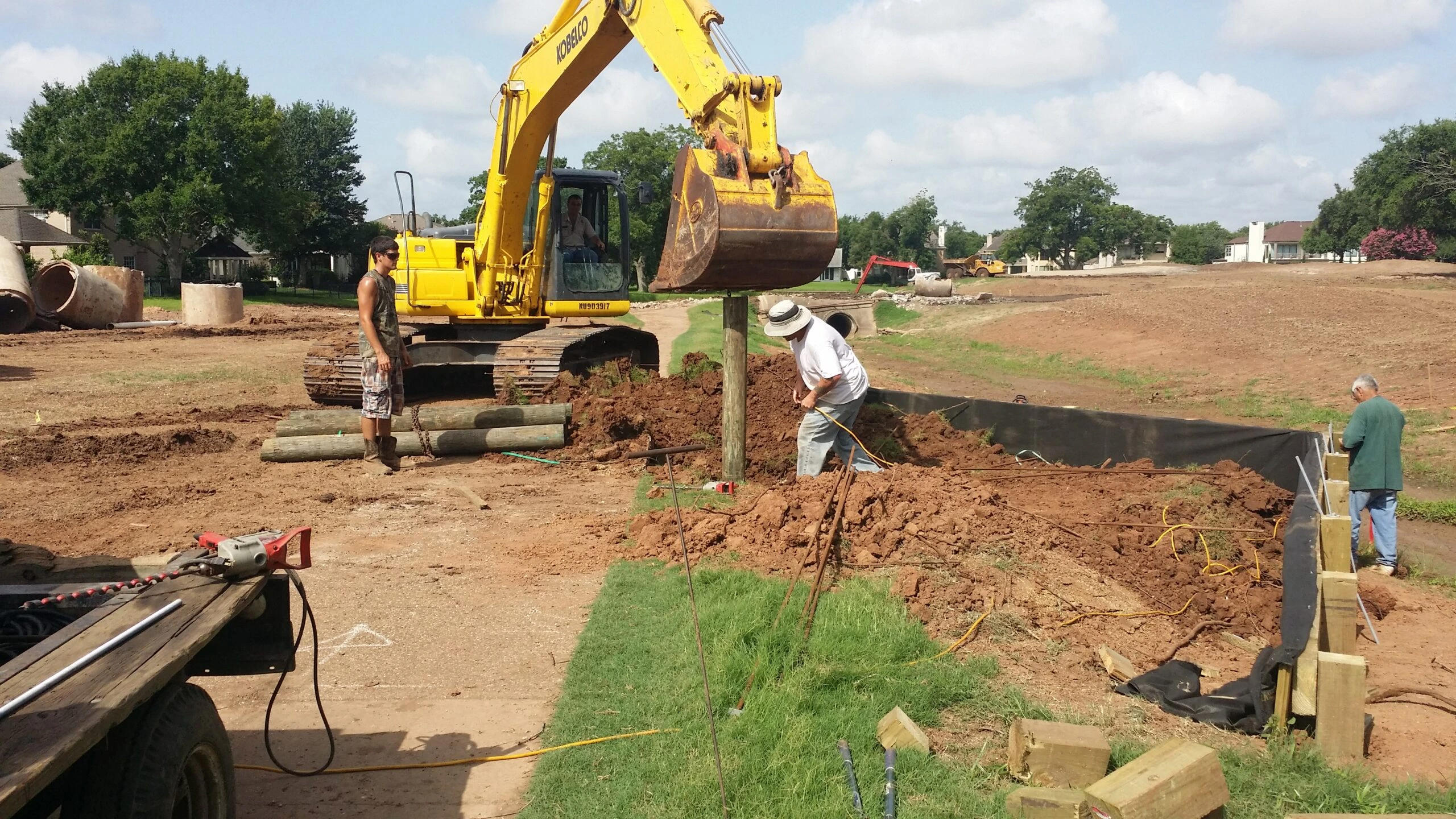
We drive steel sheet piling to the engineered depth and install structural whalers and tie-back anchors.
-
Backfill & Restoration
We backfill, compact, and restore grade behind the wall, with sod or cap details as specified.
Materials & Engineering
Steel bulkheads use heavy-gauge steel sheet piling with engineered embedment, structural whalers, and tie-back systems. All connecting hardware is corrosion-resistant, and walls are engineered for the retained soil height and hydrostatic loads at your site.
When Steel Is the Right Answer — and When It Isn't
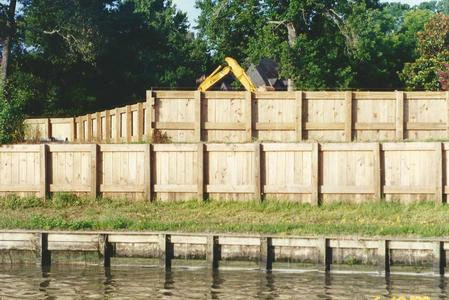
Steel sheet piling is the strongest bulkhead system we build, and it earns its cost in specific conditions: retained heights that exceed what vinyl or timber can safely hold, high-energy shorelines with real wave and wake loading, commercial and HOA walls where failure is not an option, and sites where soils or loads demand maximum section strength. Interlocking steel sheets driven to engineered embedment, tied back to buried anchors, form a wall that resists forces no other residential system matches.
It isn't the answer everywhere. On low, protected residential banks a vinyl or timber wall often delivers the needed performance at meaningfully lower cost — and we say so. Our recommendation follows the engineering: retained height, soil type, water depth, wave exposure, and what the wall must protect. That honesty is cheaper for you and better for our reputation than selling steel by default.
Corrosion is managed, not feared. Modern coatings, appropriate steel section thickness, and detailing that avoids trapped moisture give steel walls long service lives even in brackish exposure — and in freshwater lakes like Conroe, corrosion rates are far lower than coastal owners assume.
The Anatomy of a Bulkhead That Doesn't Fail
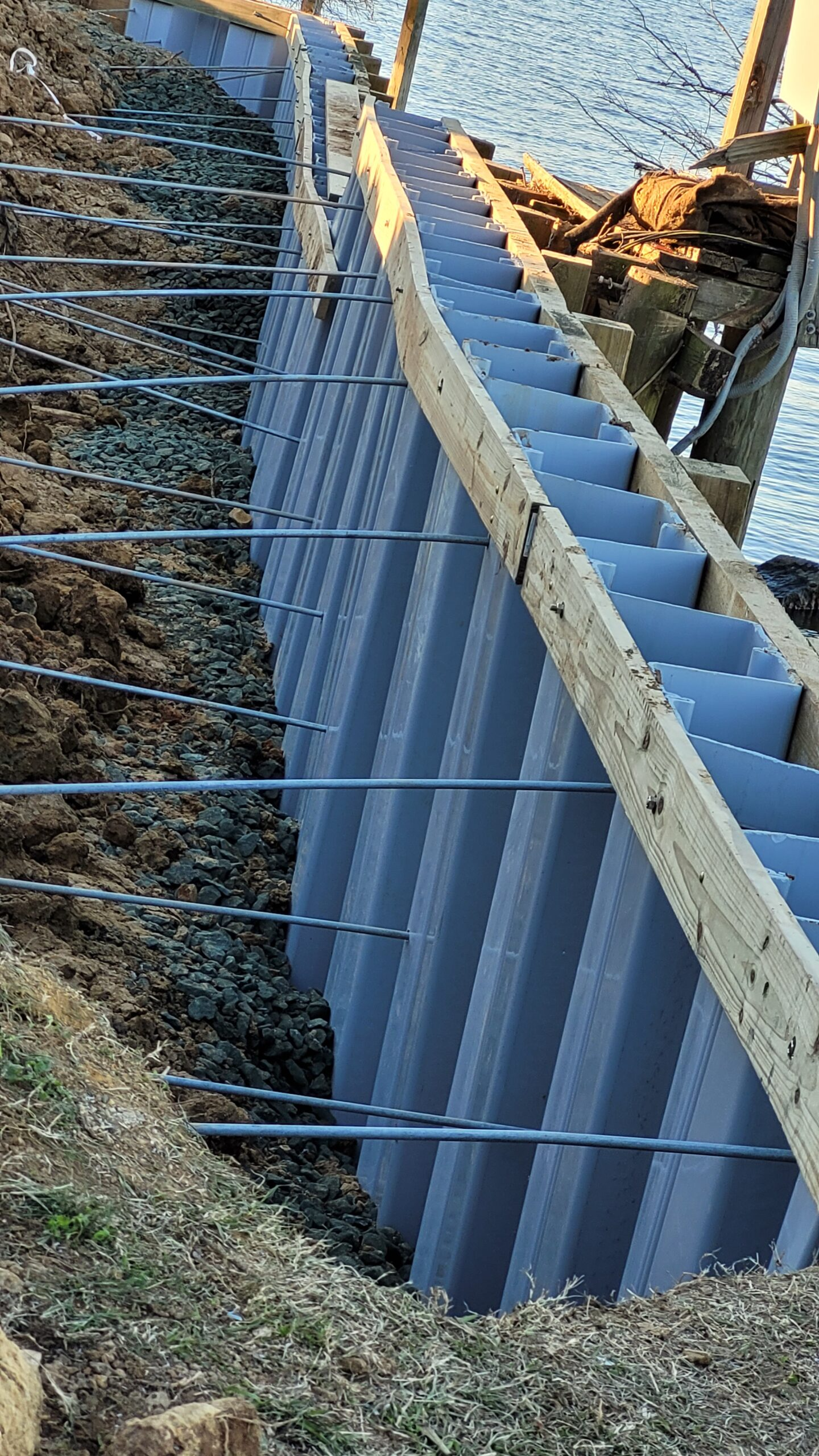
Most bulkhead failures aren't wall failures — they're anchor and drainage failures. Hydrostatic pressure builds behind any wall that can't relieve water, and a wall without adequate tie-backs rotates forward no matter how strong the sheet is. Our walls are engineered as complete systems: sheet section and embedment depth sized to the retained height, structural whalers distributing loads along the wall, tie-back rods to deadman anchors set in stable soil well behind the failure plane, and drainage detailing that lets groundwater out without letting backfill escape.
Backfill and compaction finish the job properly. Washout — soil escaping through or under a wall — creates the sinkholes and settling lawns that plague poorly built bulkheads. We backfill in compacted lifts and detail the wall's joints and base to keep soil where it belongs, then restore grade and sod so the shoreline is finished, not just walled.
Every steel bulkhead we build is permitted through the controlling authority — SJRA on Lake Conroe, TRA on Lake Livingston, City of Houston on Lake Houston, USACE Galveston District and the Texas GLO on the coast. We manage that process end to end.
Related Projects

Where We Build Steel Bulkheads
We build steel bulkheads for waterfront communities across Greater Houston, Lake Conroe, Lake Livingston, and the Texas Gulf Coast. A few of the areas we serve:
Don't see your area? View all service areas or contact us.
Steel Bulkheads FAQs
When is a steel bulkhead worth it over vinyl or wood?
Steel is the choice for tall walls, high-energy or commercial shorelines, and sites where maximum structural capacity and longevity justify the investment. We'll advise honestly based on your conditions.
Do you handle bulkhead permitting?
Yes. We coordinate permitting with the relevant authority — SJRA on Lake Conroe, the City of Houston on Lake Houston, and USACE/GLO on the coast.
How long does a steel bulkhead last?
Decades. Service life depends on water chemistry, coating system, and steel thickness — freshwater installations comfortably outlast coastal ones — but steel is the longest-lived high-strength option we build, and proper drainage and tie-back design matter as much as the steel itself.
How much does a steel bulkhead cost compared to vinyl or wood?
Steel is the premium system — typically the highest cost per linear foot of the three — justified where retained height, wave energy, or consequence of failure demand it. On sites where vinyl or timber will perform, we'll tell you and price both. Free itemized estimates make the comparison concrete.
Can you replace my failing wood bulkhead with steel?
Yes, this is common on walls that have failed repeatedly or where owners want to upgrade capacity. Depending on conditions we can often drive the new steel wall just waterward of the old one, minimizing disturbance to your yard, then remove or cap the old wall.
Does a steel bulkhead rust out in saltwater?
Unprotected steel corrodes fastest right at the waterline, which is why coastal walls use coatings and heavier sections sized for the exposure. Engineered correctly, steel serves long even in brackish water — and on freshwater lakes corrosion is a much smaller factor than most owners expect.
Related Services
Get a Free Steel Bulkheads Estimate
Tell us about your project and we'll provide a detailed, no-obligation estimate. Serving Greater Houston, Lake Conroe, Lake Livingston, and the Texas Gulf Coast.