

Engineered soil retention stabilizes slopes and shorelines using systems like erosion-control pavers, gravel-filled grids, and geotextile reinforcement — controlling runoff and holding soil in place without always requiring a full wall. Jordan Marine Construction designs and installs engineered soil-retention systems across Greater Houston, Lake Conroe, Lake Livingston, and the Texas Gulf Coast.
This is proven work for us: our team completed an engineered soil-retention project on a Texas lakefront, documented in our project blog. We bring that same engineered approach to slopes and shorelines losing soil to runoff and water-level change.
Request Your Free EstimateOur Engineered Soil Retention Process
-
Slope & Drainage Assessment
We evaluate the slope, soil, runoff patterns, and water exposure to design the right retention system.
-
System Design
We specify the appropriate solution — erosion pavers, gravel grid systems, geotextile reinforcement, or a hybrid with riprap or walls.
-
Installation
We prepare the subgrade, install the engineered system, and integrate drainage to control runoff.
-
Restoration
We finish and revegetate or surface the area for a stable, lasting result.
Proven, Engineered Systems
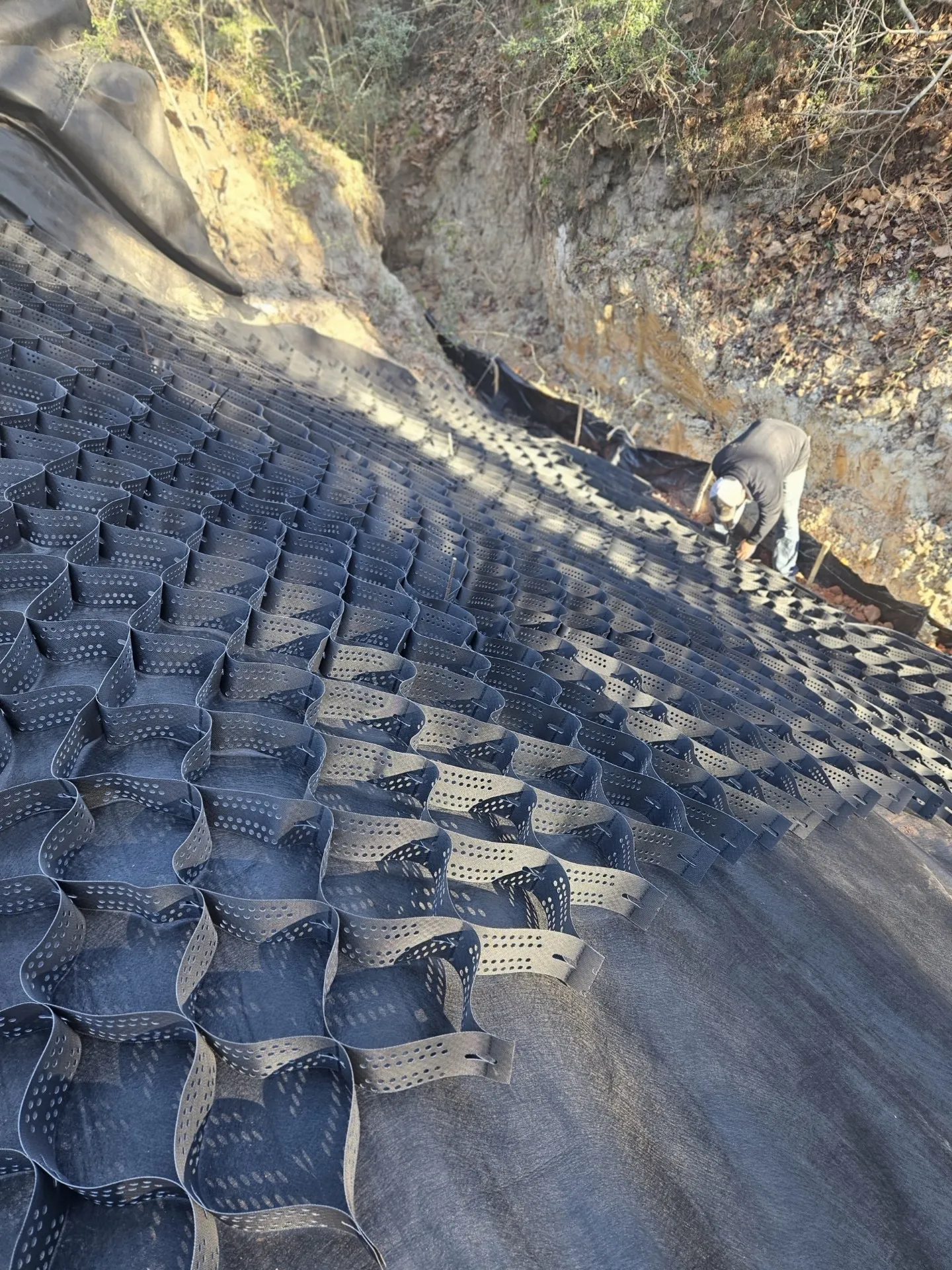
We install erosion-control pavers, gravel-filled grid systems, and geotextile-reinforced sections, engineered to the slope and runoff at your site. These systems can stabilize ground where a conventional wall is unnecessary or impractical, and they pair well with riprap and retaining walls.
Stabilizing Slopes Without Building a Wall
Not every eroding slope needs a wall — and building one where it isn't needed wastes money and often looks wrong on the landscape. Engineered soil retention occupies the middle ground: systems that lock soil in place on graded slopes, control the runoff that was carrying it away, and let vegetation re-establish through the reinforcement. Erosion-control pavers, gravel-filled cellular grids, and geotextile-reinforced sections each hold grade mechanically while remaining permeable, so water passes through without taking the bank with it.
The engineering is in matching system to slope. Cellular confinement grids filled with gravel handle steeper grades and drive-over areas; erosion-control pavers armor swales and high-flow paths while staying walkable; geotextile reinforcement adds tensile strength inside rebuilt slopes that soil alone can't provide. Subgrade preparation and drainage integration underneath decide whether the system performs for decades or deforms in the first saturated season.
This is proven work for us, not a catalog offering — our completed engineered soil-retention project on a Texas lakefront is documented as a case study on our blog, and the same design approach drives every slope we take on: assess the soil, the grade, and the runoff first, then specify the lightest system that permanently solves it.
Where Retention Systems Beat Walls — and Where They Don't
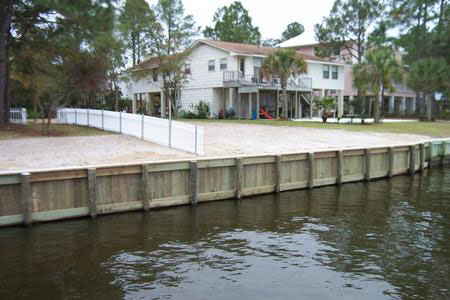
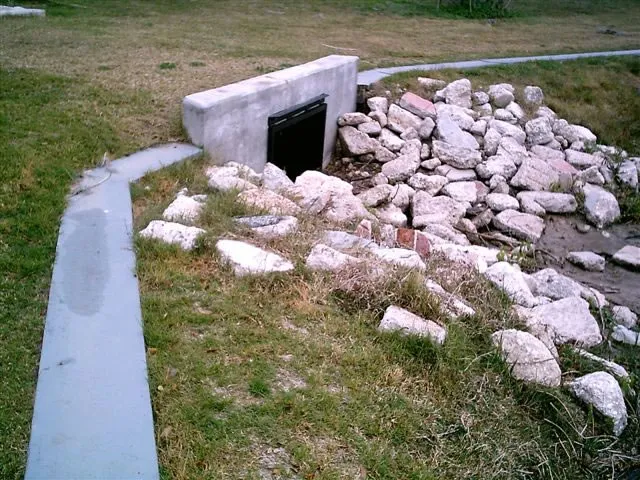
Retention systems excel on moderate slopes losing soil to runoff and saturation: lakefront banks above the waterline, drainage swales cutting deeper each storm, terraced yards creeping downhill, and the transition zones between bulkheads and upland grade where erosion loves to restart. In those settings they typically cost less than structural walls, disturb the site less, and finish more naturally — grass and plantings grow through and over the reinforcement.
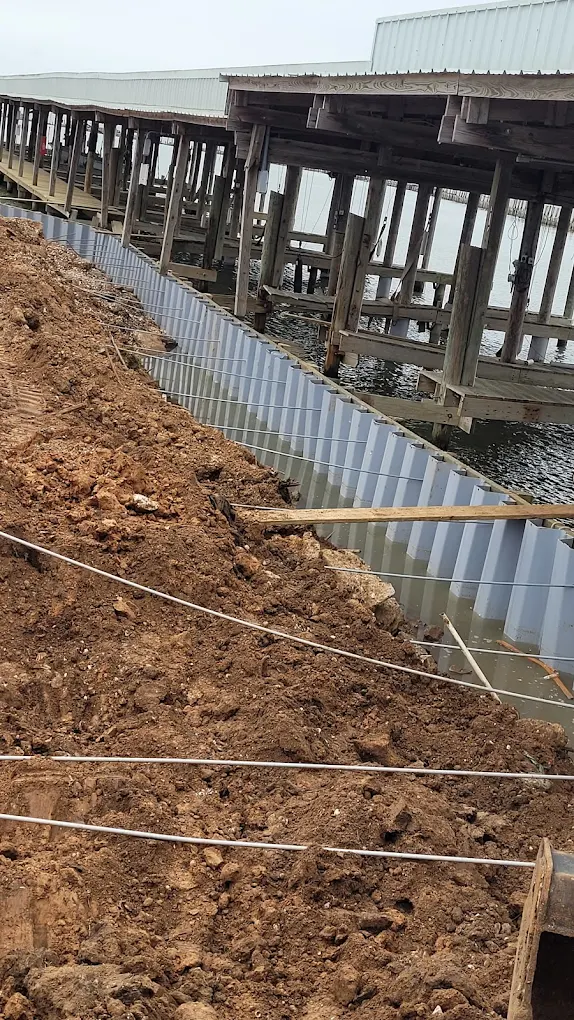
They are not a substitute for structure where structure is required: a vertical bank at the water's edge taking wave energy needs a bulkhead or seawall, and a tall saturated bank holding back real grade needs an engineered wall with anchoring. The systems also pair well — retention stabilizing the slope above a bulkhead, riprap absorbing wave energy at the toe below — and because we build all of it, we design the combination that fits the site rather than forcing one product everywhere.
Every project finishes as usable landscape: subgrade prepared, system installed and filled, drainage integrated, and the surface revegetated or finished so what you get back is a stable, attractive slope rather than an industrial-looking patch.
Related Projects
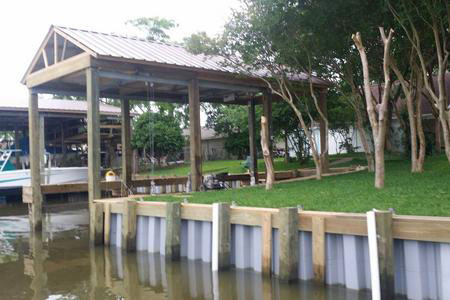
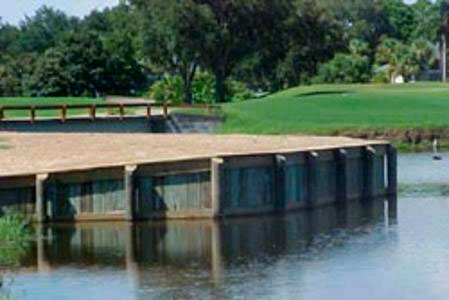
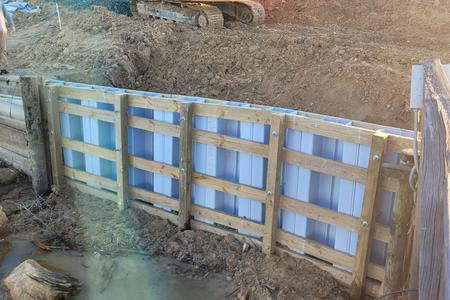
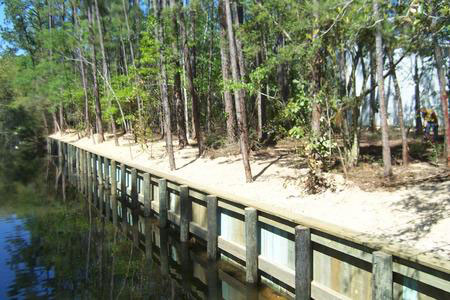
Where We Build Engineered Soil Retention
We build engineered soil retention for waterfront communities across Greater Houston, Lake Conroe, Lake Livingston, and the Texas Gulf Coast. A few of the areas we serve:
Don't see your area? View all service areas or contact us.
Engineered Soil Retention FAQs
When do I need soil retention instead of a wall?
On moderate slopes and runoff-driven erosion, engineered soil-retention systems can stabilize the ground more economically than a full wall. For vertical banks at the water's edge, a bulkhead or seawall is usually required. We assess and recommend.
Have you done this before?
Yes — we completed an engineered soil-retention project on a Texas lakefront, which is documented as a case study on our blog.
What does engineered soil retention cost compared to a retaining wall?
On slopes where both would work, retention systems usually come in below a structural wall — less material, less excavation, no anchoring system. The honest comparison depends on your slope's grade and saturation; our free assessment prices the system that actually fits rather than defaulting to the most expensive option.
How steep a slope can these systems handle?
Cellular grid and paver systems handle surprisingly steep grades when properly anchored and filled, but every system has limits set by soil type and saturation. Beyond those limits the honest answer is a wall. We assess grade, soil, and water behavior before recommending — the site picks the system.
Can grass grow through the retention system?
Yes — that's a design feature. Gravel-grid and paver systems are commonly finished with soil and seed or sod so vegetation establishes through the cells, hiding the structure entirely while the reinforcement keeps holding. The finished slope reads as landscape, not hardscape.
Will this stop the gully forming on my lakefront slope?
A gully means concentrated runoff, and the fix is twofold: armor the flow path (pavers or grid in the swale) and manage the water reaching it (drainage integration above). Armoring alone without addressing the flow just moves the cut somewhere else — our design covers both.
Is this the same as what you did in your soil retention case study?
Same approach, adapted to your site. That documented Texas lakefront project combined engineered retention with drainage control on an eroding bank — the blog write-up shows the process and finished result. Every slope differs, but the assess-design-install method is identical.
Related Services
Get a Free Engineered Soil Retention Estimate
Tell us about your project and we'll provide a detailed, no-obligation estimate. Serving Greater Houston, Lake Conroe, Lake Livingston, and the Texas Gulf Coast.