

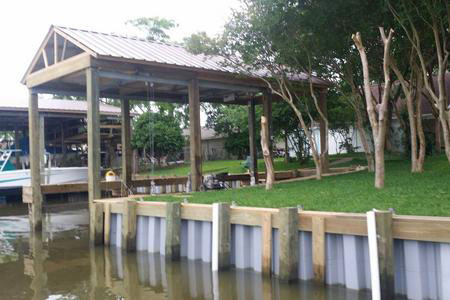
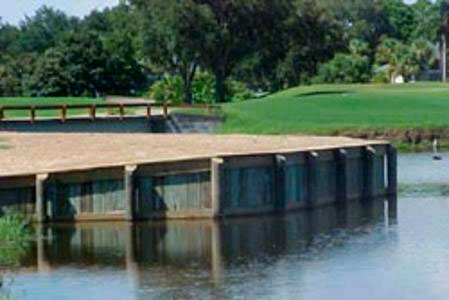
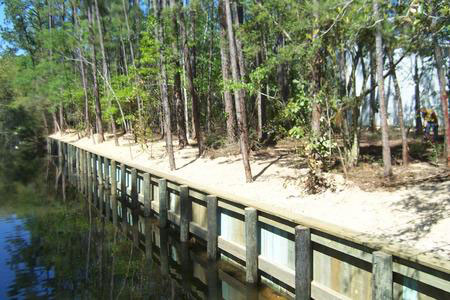
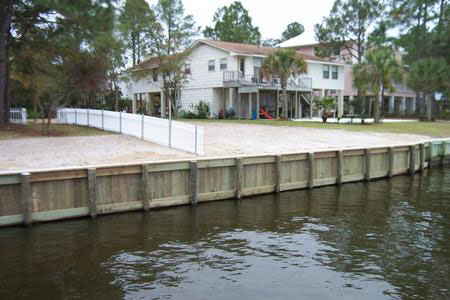
A wood bulkhead offers sturdy, natural shoreline defense with traditional appeal. Jordan Marine Construction builds treated-timber bulkheads across Lake Conroe, Lake Livingston, Clear Lake, and the Houston Gulf Coast, often tying into neighboring walls for a continuous, protected shoreline.
Expertly crafted from high-quality treated timbers and proper sheeting, our wood bulkheads deliver lasting erosion protection at a competitive cost.
Request Your Free EstimateOur Wood Bulkheads Process
-
Shoreline Assessment
We assess bank height, soil, water level, and connections to neighboring bulkheads to engineer the wall.
-
Design & Permitting
We specify sheeting, whalers, tie-backs, and embedment, and handle the permitting process.
-
Driving & Construction
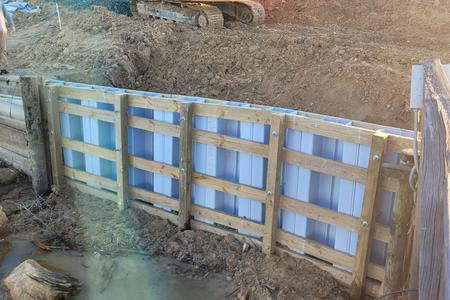
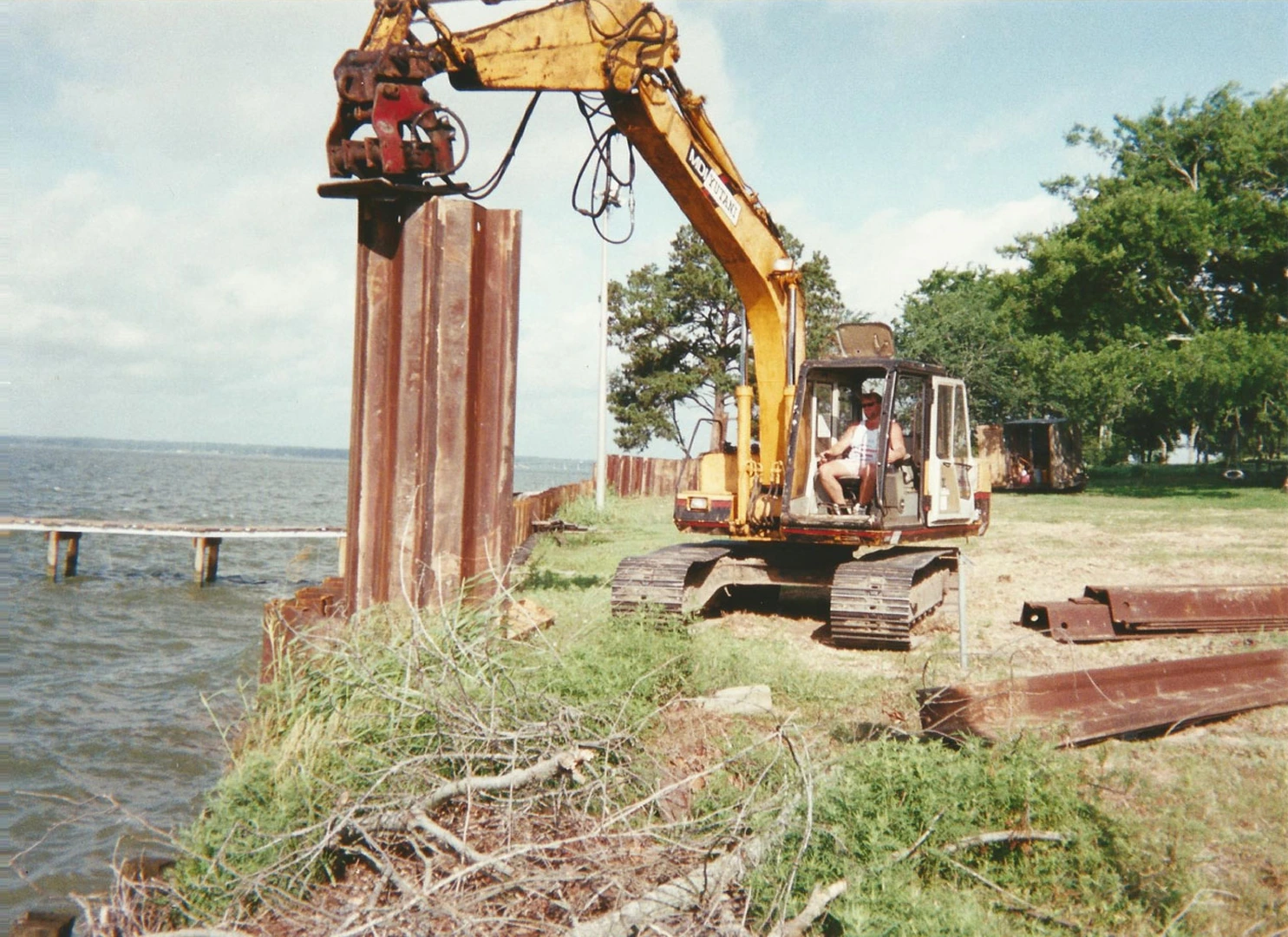
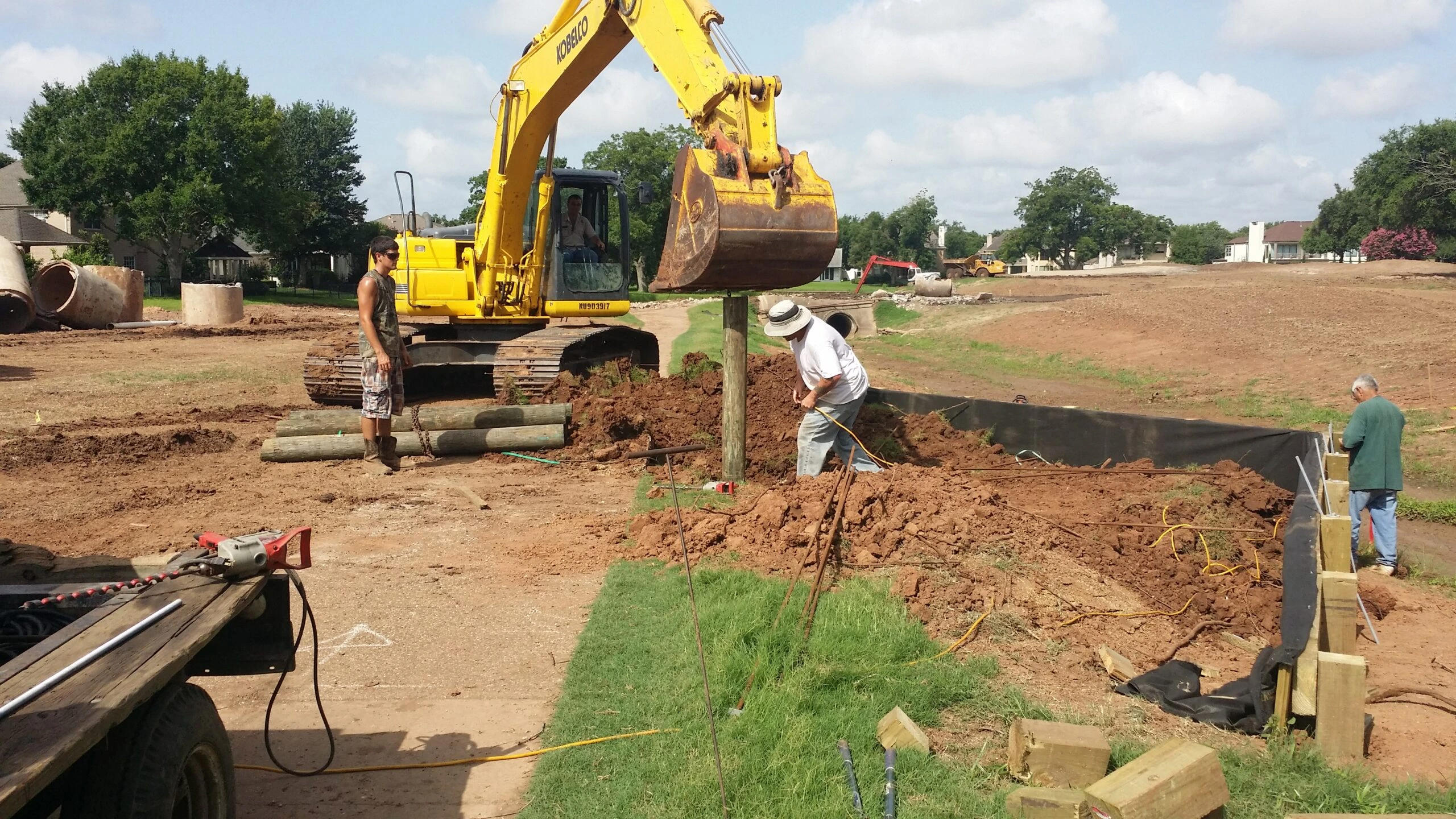
We drive sheeting into the bottom and install treated whalers bolted with hot-dip galvanized through-bolts.
-
Backfill & Restoration
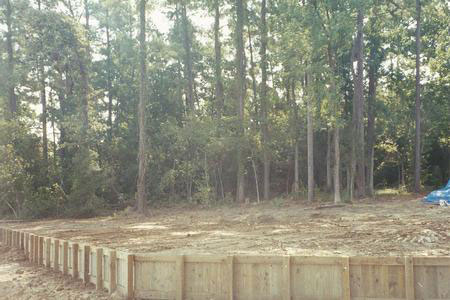
We backfill to grade and restore sod behind the completed wall.
Materials & Treatment Specifications
Wood bulkheads use high-quality treated timbers and tongue-and-groove sheeting, treated to the appropriate retention for the environment (.60 CCA for freshwater, higher for saltwater). Whalers are through-bolted with hot-dip galvanized hardware for a long-lasting, rigid wall.
The Case for Timber: Proven, Repairable, and Budget-Smart
Wood bulkheads have protected Texas lake shorelines for generations, and built correctly they still make excellent sense: the lowest up-front cost of the three wall systems, a warm natural appearance that suits wooded lots, and construction that's straightforward to repair or extend decades later. On protected residential shorelines with moderate bank heights, a properly engineered timber wall delivers decades of service.
'Built correctly' carries weight. The timber must be treated to the retention its exposure demands — .60 CCA for freshwater lakes like Conroe and Livingston, 2.5 CCA where water turns brackish — or borers and rot will hollow it out from the waterline down. Whalers must be through-bolted with hot-dip galvanized hardware, not nailed. Tongue-and-groove sheeting must seal well enough to hold backfill. And like every wall we build, embedment and tie-backs are engineered to the bank, not copied from the neighbor's wall.
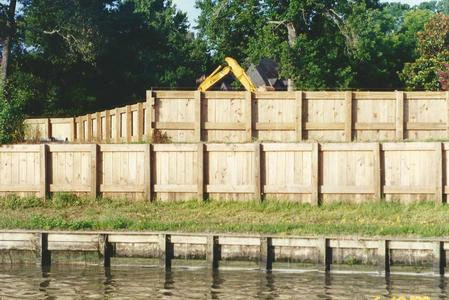
We also routinely tie new timber walls into adjacent bulkheads on both property lines, matching heights and sealing the joints so the shoreline reads as one continuous wall — a detail lake communities appreciate and inspectors look for.
What Kills Wood Bulkheads — and How We Build Against It
Three failure modes account for nearly every dead timber wall we replace. First, washout: backfill escaping through gaps in sheeting or under a shallow wall, creating voids and sinkholes behind the cap. Second, tie-back failure: rods or deadmen corroding or pulling loose, letting hydrostatic pressure rotate the wall waterward. Third, rot and borer attack at the waterline, usually from under-treated timber. Every one of them is preventable at construction time.
Our builds counter each directly: tight tongue-and-groove sheeting driven to engineered depth, corrosion-protected tie-back systems anchored in stable soil, correct treatment retention for the water chemistry, and drainage that relieves pressure instead of trapping it. It's the difference between a wall that quietly does its job for decades and one that starts leaning before the loan is paid off.
When an existing wood wall is failing, we assess whether repair — new whalers and caps, tie-back restoration, targeted sheet replacement — buys meaningful life, or whether replacement (in timber, vinyl, or steel) is the honest recommendation. Because we build all three systems, the advice follows the site, not a sales sheet.
Related Projects
Where We Build Wood Bulkheads
We build wood bulkheads for waterfront communities across Greater Houston, Lake Conroe, Lake Livingston, and the Texas Gulf Coast. A few of the areas we serve:
Don't see your area? View all service areas or contact us.
Wood Bulkheads FAQs
How long does a wood bulkhead last?
A properly engineered and treated wood bulkhead provides many years of service. Treatment level, hardware, and drainage all affect longevity — all of which we specify correctly for your site.
Can you connect to my neighbors' bulkheads?
Yes. We routinely tie new wood bulkheads into adjacent walls on both sides for a continuous, properly sealed shoreline.
How long will a wood bulkhead last on Lake Conroe?
A properly engineered timber wall with correct treatment (.60 CCA freshwater), galvanized through-bolted hardware, and good drainage delivers decades of service. Cut corners on any of those and the clock runs much faster — the treatment level and tie-back quality are the biggest variables.
Is a wood bulkhead cheaper than vinyl?
Typically yes on up-front cost, which is why timber remains popular for budget-conscious projects and large shoreline runs. Vinyl closes the gap over the long term by eliminating weathering and treatment concerns. We'll price both for your site if you're weighing them.
Can you repair my existing wood bulkhead instead of replacing it?
Often, yes — new caps and whalers, tie-back restoration, void filling, and targeted sheet repairs can extend a structurally sound wall's life at a fraction of replacement cost. We inspect first and tell you honestly which side of the line your wall is on.
What's the greenish tint on treated bulkhead timber?
That's the CCA preservative treatment that protects the wood from rot and marine borers. It weathers to a natural gray over time. The retention level (.60 freshwater, 2.5 saltwater) determines how much protection the timber carries — using lumber-yard .25 or .40 boards in the water is a common DIY mistake.
Related Services
Get a Free Wood Bulkheads Estimate
Tell us about your project and we'll provide a detailed, no-obligation estimate. Serving Greater Houston, Lake Conroe, Lake Livingston, and the Texas Gulf Coast.