

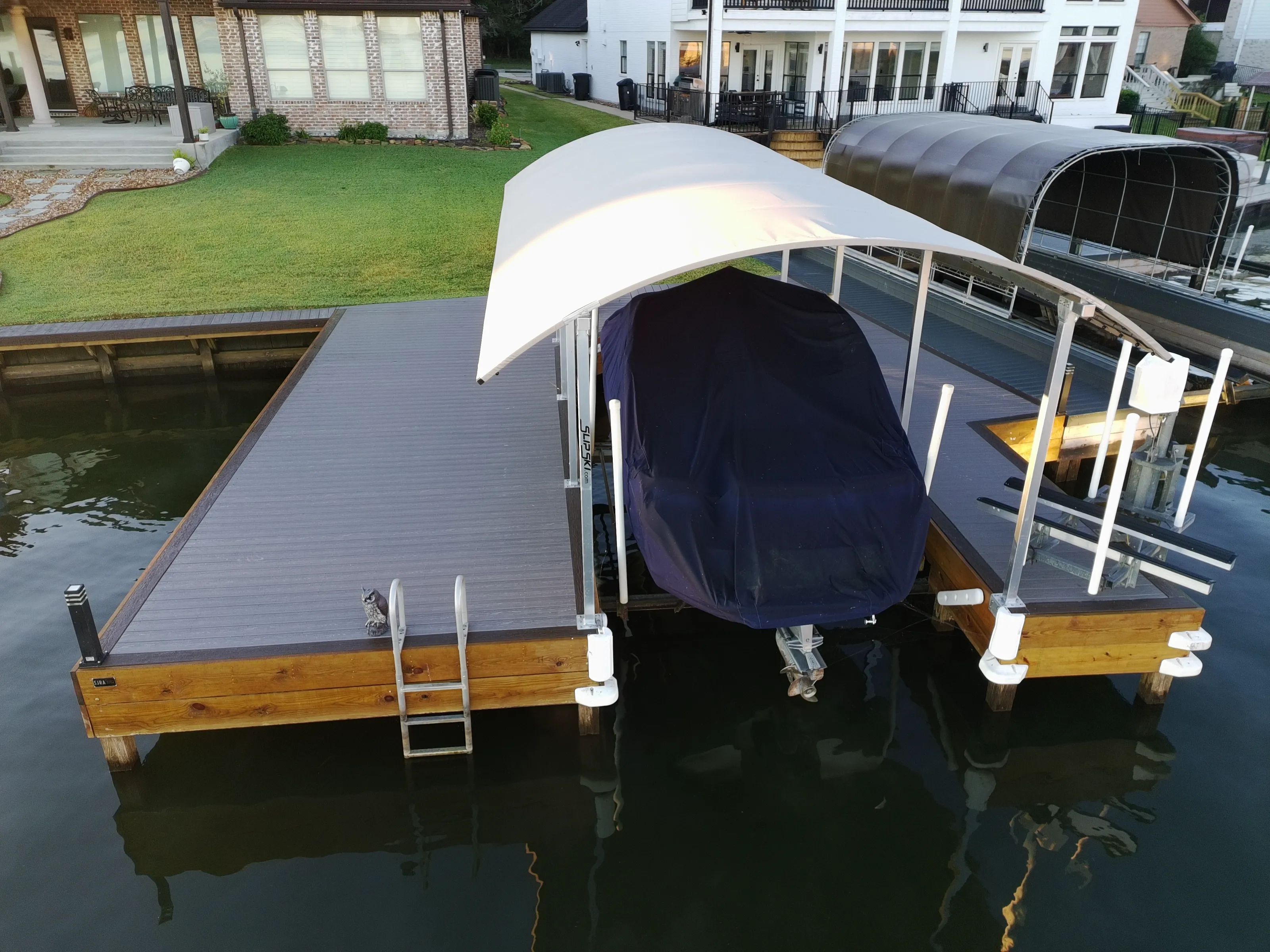
A properly sized and aligned boat lift protects your investment from hull damage, marine growth, and storm water. Jordan Marine Construction designs and installs boat lifts — including rotating wave-runner lifts — across Lake Conroe, Lake Livingston, Clear Lake, and the Houston Gulf Coast, matched to your vessel weight and your dock structure.
We install reliable lift systems with marine-grade components and precise alignment, and our licensed electricians can run power from your existing source so the lift is turnkey on day one.
Request Your Free EstimateOur Boat Lifts Process
-
Vessel & Site Sizing
We confirm your boat or PWC weight, beam, and how your dock is framed to specify a lift with the right capacity and geometry.
-
Lift Selection
We recommend the correct lift type — conventional cradle, vertical, or rotating wave-runner lift — for your water depth and use.
-
Installation & Alignment
We mount and align the lift to your dock or pilings, set guides and bunks, and dial in level operation.
-
Electrical & Handoff
Our licensed electrician connects power from your existing source, we test the full cycle, and we walk you through operation and maintenance.
Components & Electrical
We use marine-grade lift hardware and corrosion-resistant cables and fasteners rated for continuous immersion exposure. Electrical work is performed by a licensed electrician to code, tied into your existing bulkhead or dock power source.
Why Correct Lift Sizing and Alignment Matter More Than the Brand
Most boat lift problems we're called to fix are not equipment failures — they are installation failures. A lift sized to the boat's dry weight instead of its wet, fully loaded weight (fuel, gear, wakeboard ballast) runs at or over capacity every cycle. Bunks set to the wrong hull contact points stress stringers. A cradle out of level side-loads cables until they fray. These are avoidable with correct sizing and precise alignment at install.
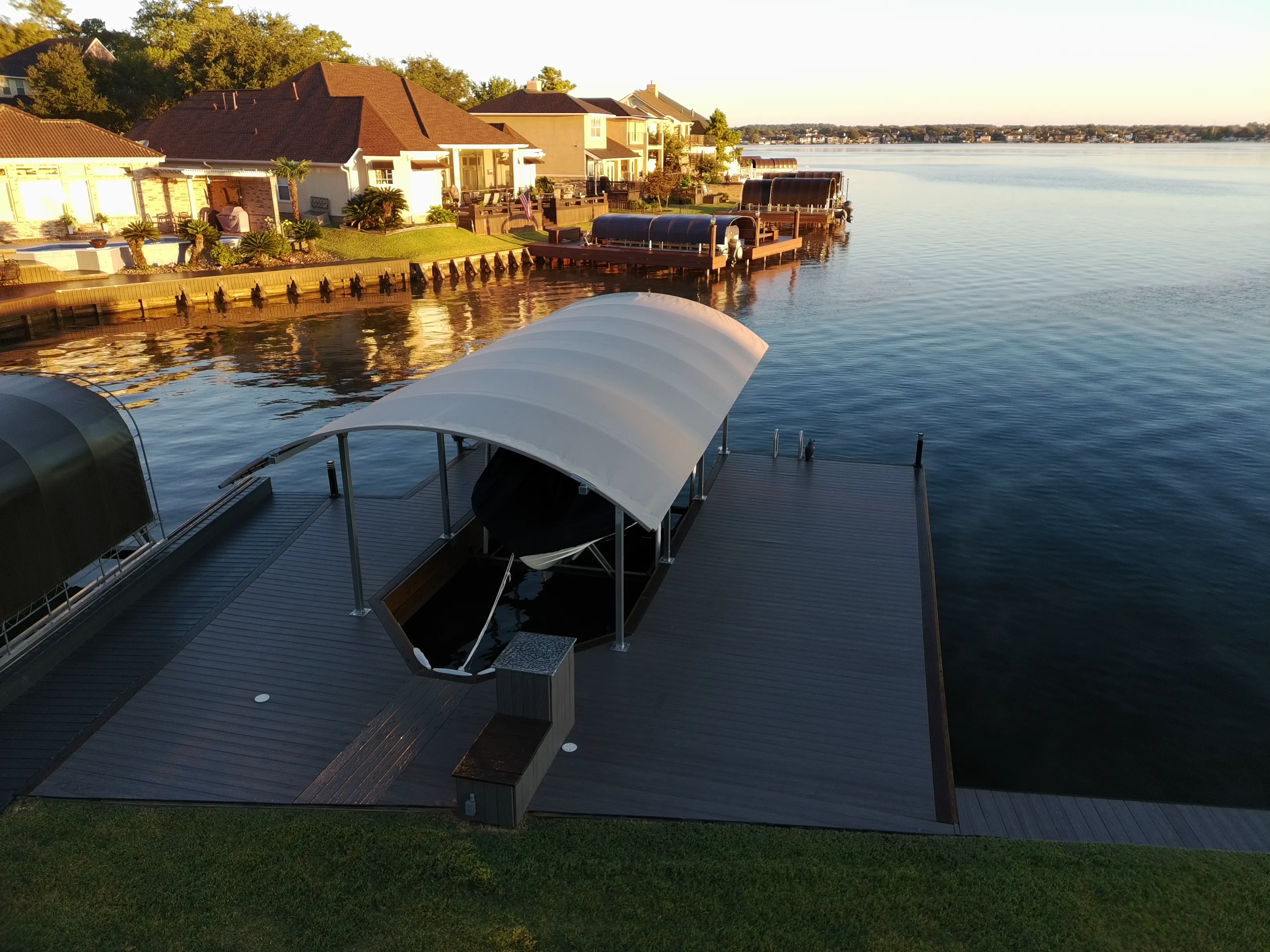
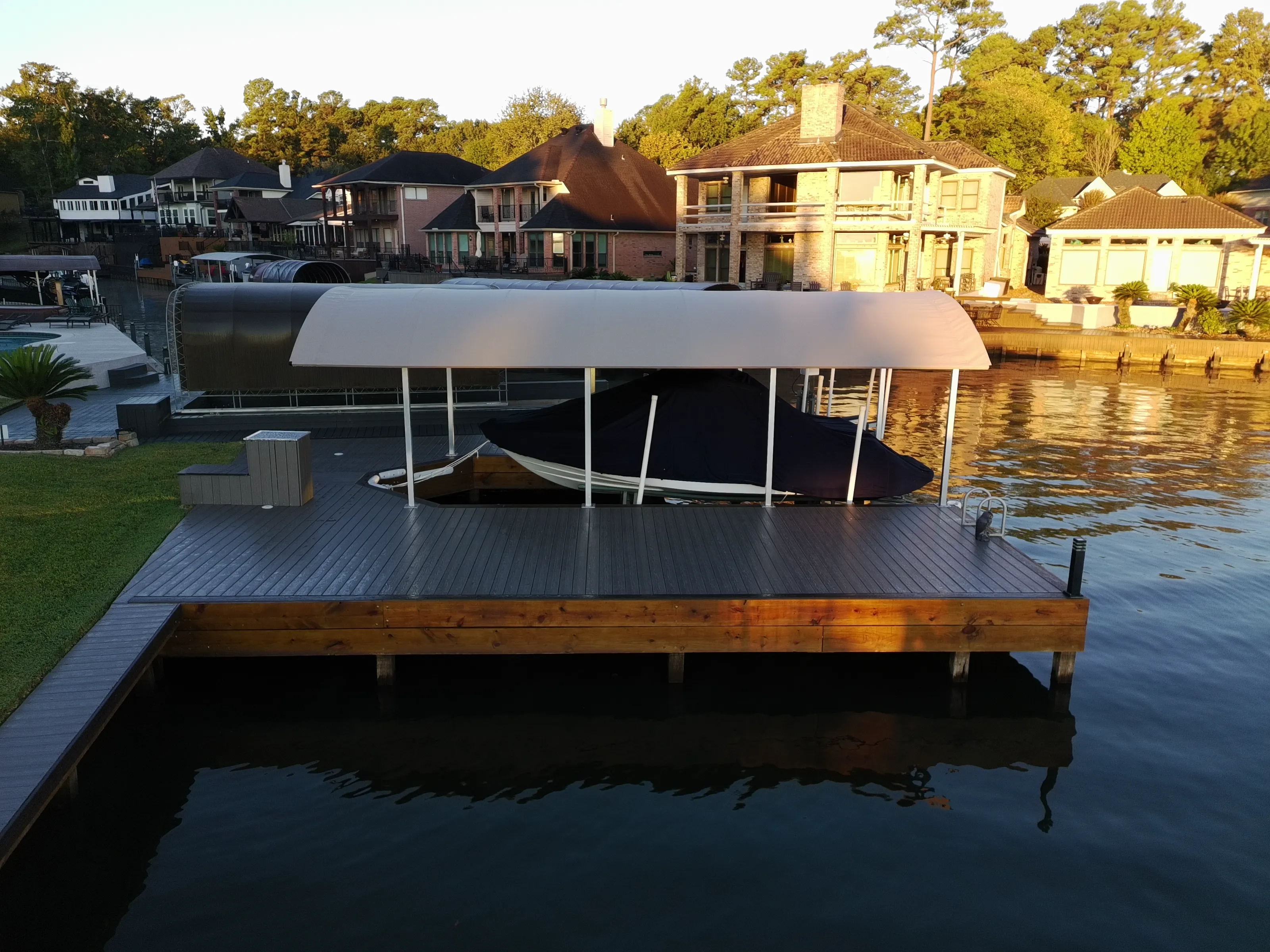
We spec every lift from your actual vessel — hull type, beam, loaded weight with a safety margin — and from your dock's framing, because the lift's loads have to travel through the structure into the pilings. When we install lift and dock together, those load paths are engineered as one system; when we add a lift to an existing dock, we verify the structure can carry it first and reinforce where it can't.
Alignment is where experience shows. Guides, bunks, and cradle level are dialed to your hull so the boat loads straight in a crosswind and rests correctly every time. A properly aligned lift is one-person easy; a misaligned one turns every return to the dock into a wrestling match.
Lift Types for Texas Lakes and the Gulf Coast
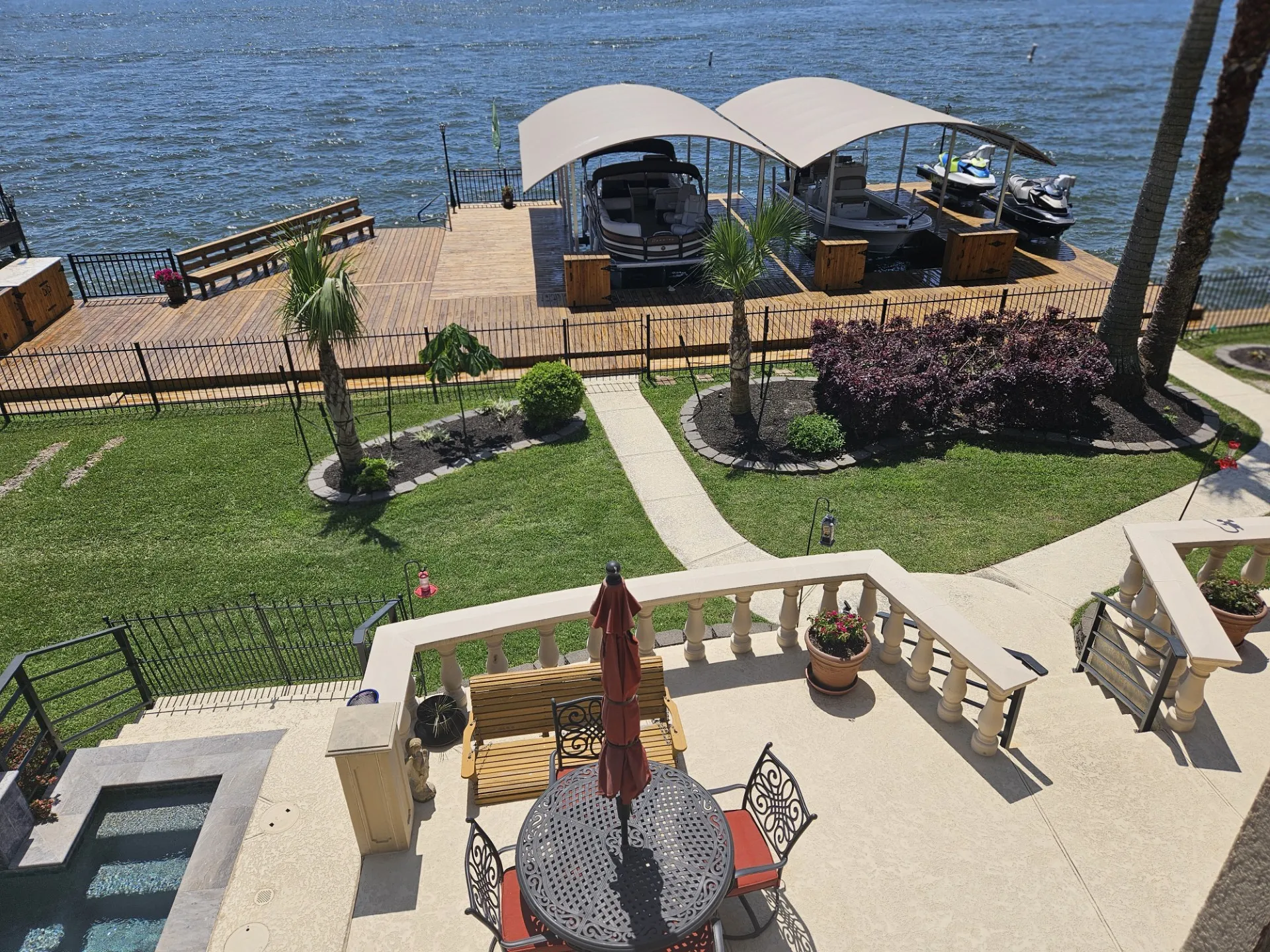
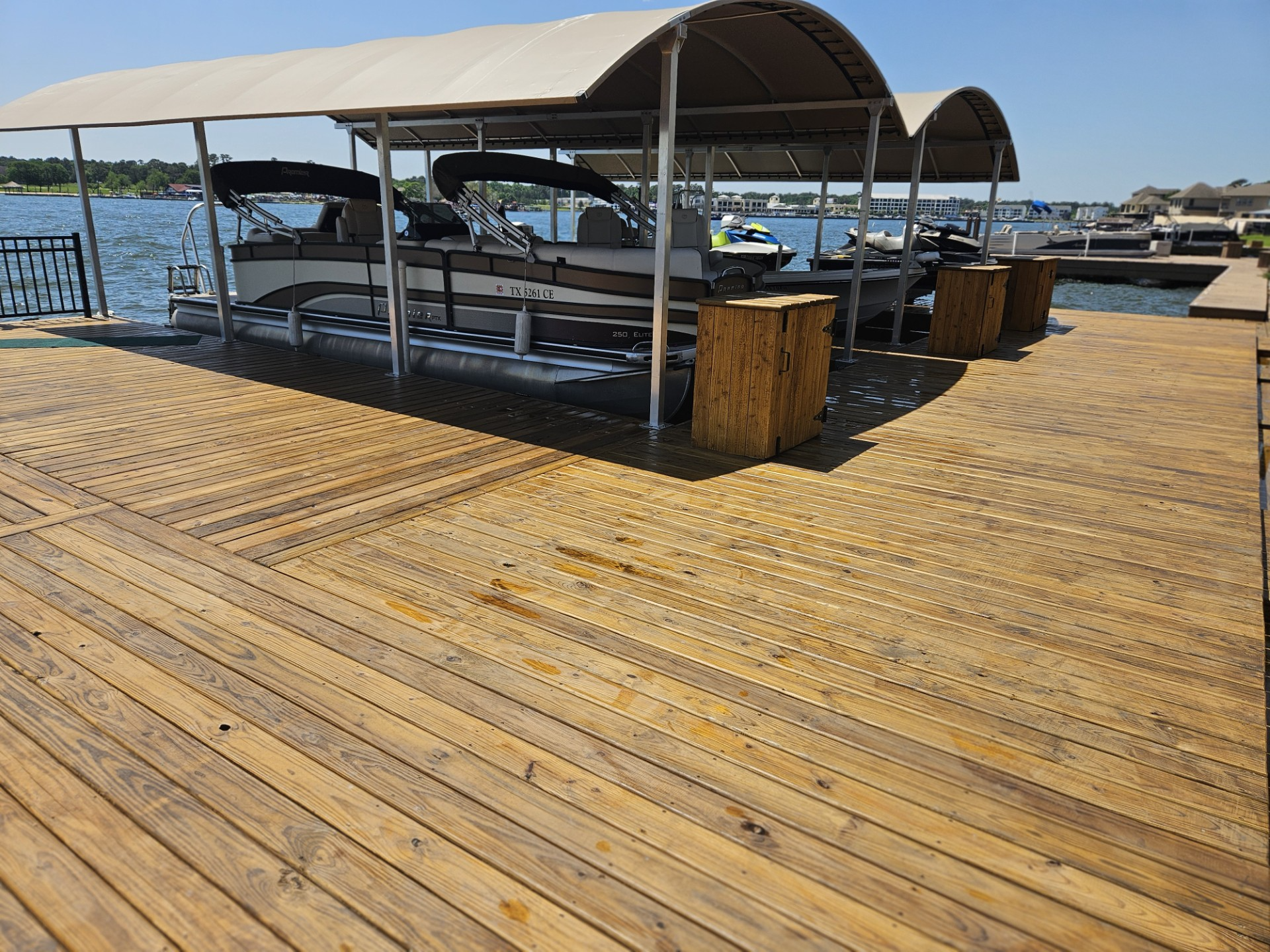
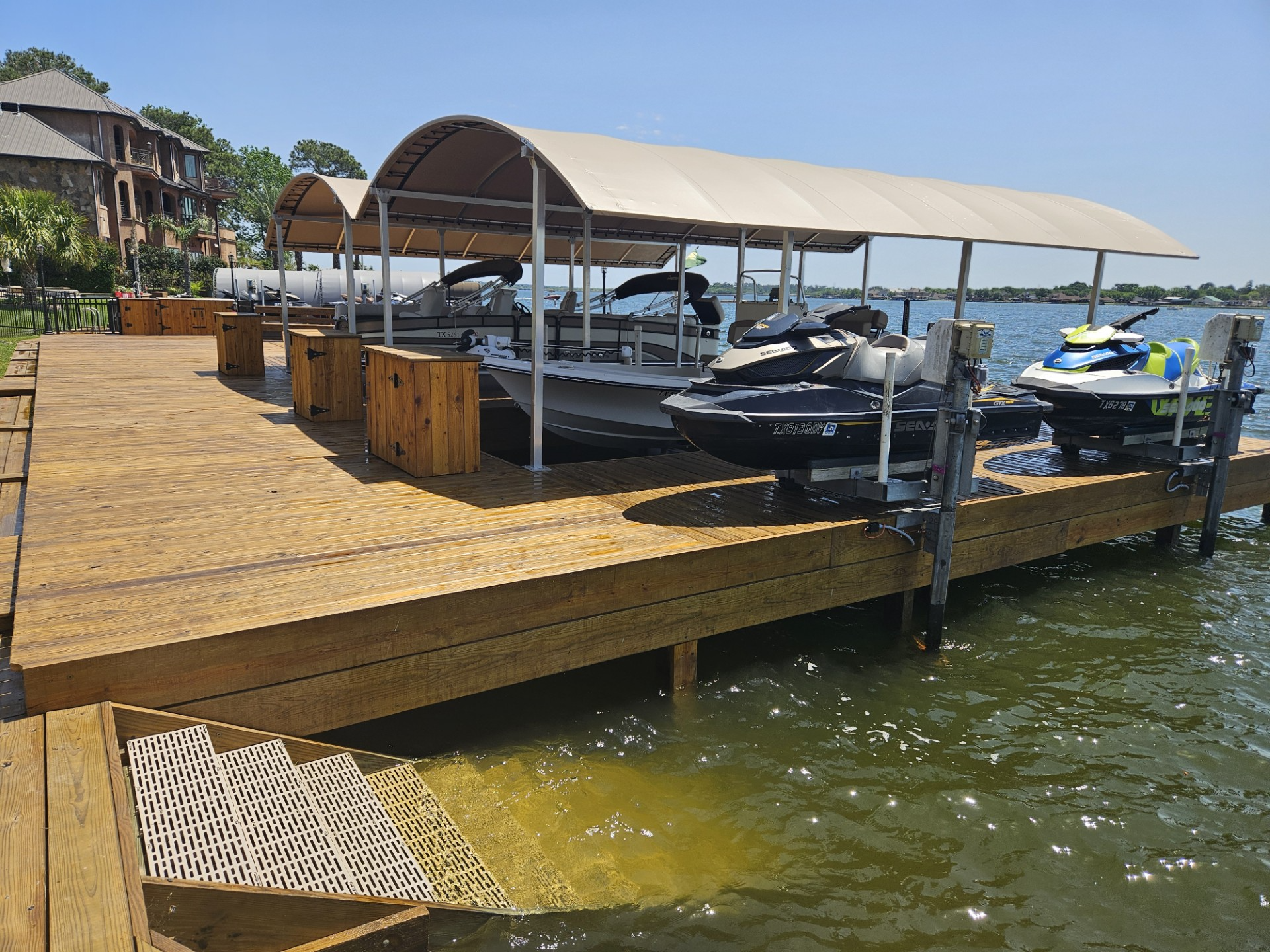
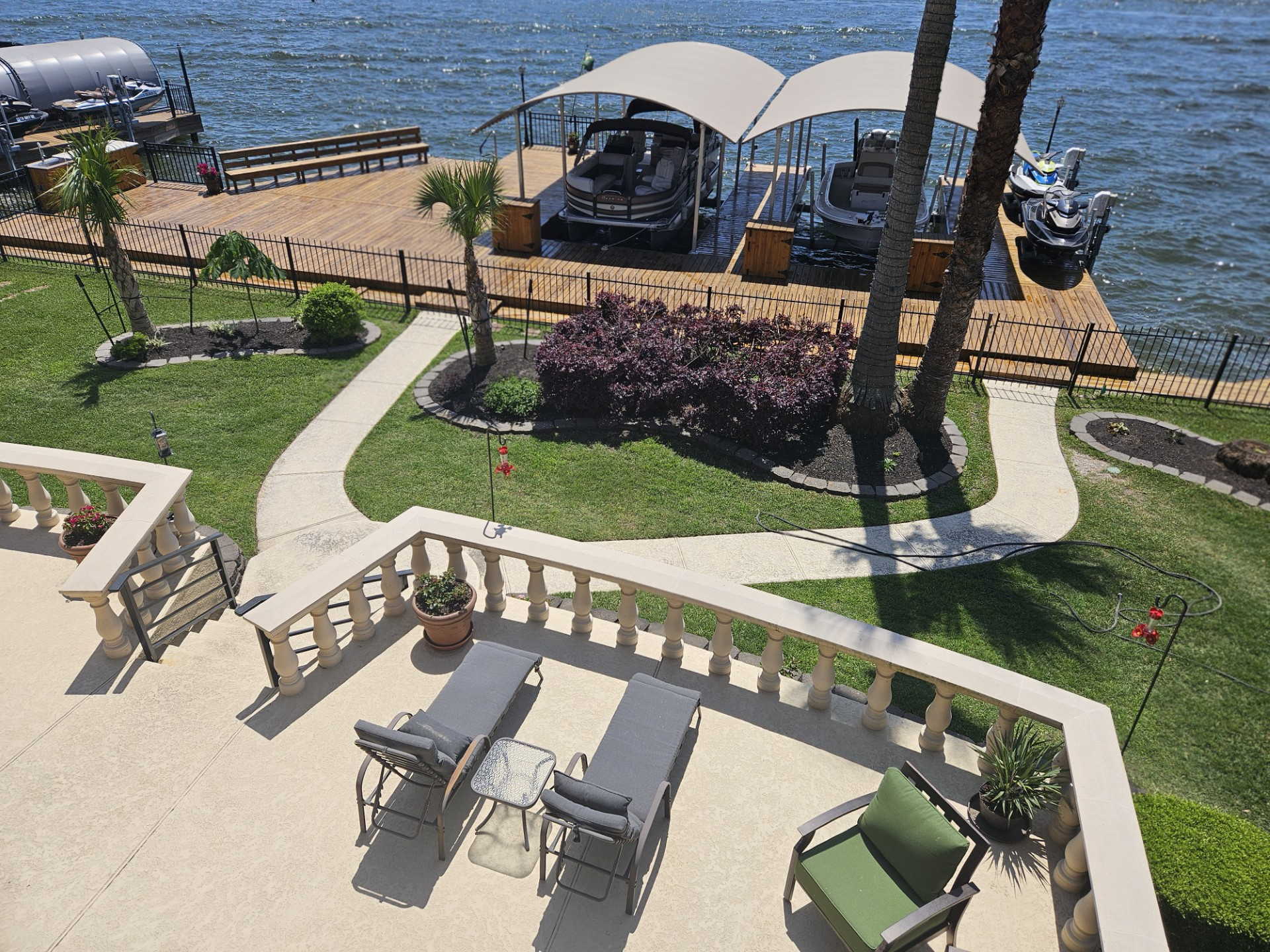
Conventional cradle and vertical lifts cover most powerboats on Lake Conroe, Lake Livingston, and Lake Houston — we size the platform and capacity to the vessel and set travel height for the lake's seasonal swing. For PWCs, rotating wave-runner lifts swing the craft over the dock for step-off access, and multi-craft configurations put a boat and two PWCs on one structure without crowding the slip.
Saltwater and brackish installations on Galveston Bay demand corrosion-resistant everything: marine-grade cables, sealed or stainless hardware, and components rated for continuous immersion exposure. Freshwater installs are more forgiving but still live outdoors in Texas heat — we use marine-grade componentry throughout so the lift outlasts its warranty by decades rather than failing just past it.
Every install finishes with electrical done right. Our licensed electricians run power from your existing source at the bulkhead or dock, wire the lift to code, and test full up-down cycles under load before handoff. Waterline electrical is not a place for shortcuts, and it's included in the project rather than left for you to arrange.
What a Lift Saves You Over the Life of the Boat
A boat stored in the water is continuously degrading: marine growth on the hull drags performance and fuel economy, gelcoat blisters from prolonged immersion, anodes and outdrives corrode, and every storm works the mooring lines. A lift removes all of it. The hull stays clean and dry, bottom paint becomes optional on most lakes, and the boat is above the chop when weather rolls through.
The payback is real: less hull cleaning and bottom maintenance, slower corrosion, better resale condition, and the daily convenience of pressing a button instead of scrubbing scum lines. On lifts we install, we also walk you through seasonal care — cable inspection, greasing, and off-season positioning — so the equipment itself lasts.
What a Boat Lift Costs — and What Drives the Number
Boat lift cost is not one number, and any contractor who quotes you one before seeing your slip is guessing. Four variables do almost all the work. Capacity is the first: a rotating PWC lift is a fundamentally smaller project than a 12,000-pound cradle lift, and capacity drives the motor, cables, beams, and the loads the dock has to carry. Lift type is the second — conventional cradle, vertical, and rotating PWC systems differ substantially in hardware and installation labor.
The third variable is the one that surprises people: whether your existing dock can carry the lift. A lift concentrates several tons onto specific framing members and pilings that may have been sized only for foot traffic. If the structure needs reinforcement — sistered framing, additional or upgraded pilings, new beams — that work is part of the real cost of the lift, and pretending otherwise is how docks get pulled apart. We assess the structure and price reinforcement honestly up front rather than discovering it mid-install.
The fourth is electrical. A lift adjacent to an existing power source is a short run; a lift at the end of a long pier with no power out there is a different job. Our licensed electrician runs power from your existing source and connects to code, including the GFCI protection and bonding that NEC Article 555 requires around water. We quote free, itemized estimates so you can see each of these four components separately and make real decisions about the scope.
Boat Lift Repair and Service
We service and repair lifts we did not install, which is most of the lift work we do. The failures are predictable. Cables are the number one item — they fray, corrode at the drum and sheaves, and eventually part, usually with a boat on the lift. Cables are a wear component with a finite life, not a permanent part, and replacing them on schedule is dramatically cheaper than the alternative.
Motors and gearboxes fail from moisture intrusion and from being run against a bind. Sheaves and pulleys seize when grease schedules get skipped, which then chews the cable running over them. Bunks and cradles drift out of alignment and start loading the hull unevenly, which is both a hull problem and a lift problem. Switches, controls, and wiring degrade fast in a marine environment, and old lift wiring without GFCI protection is a genuine electric shock drowning hazard, not a code technicality.
And underneath all of it, the dock structure carrying the lift ages. A lift that has started to rack, bind, or sit unevenly is frequently telling you about the pilings and framing rather than the lift mechanism. Because we build and repair the docks themselves, we assess both — a lift diagnosis that ignores the structure it is bolted to is only half an answer. If you are searching for boat lift repair near you, that is the capability worth checking for.
Boat Lift Installers Across Greater Houston and the Lakes
We install and service boat lifts across Lake Conroe, Lake Livingston, Lake Houston, Clear Lake, Kemah, Seabrook, League City, Galveston Bay, and the surrounding Gulf Coast communities, and the water you are on changes the specification meaningfully.
On Lake Conroe and Lake Livingston, the governing constraint is seasonal level swing. Both are managed reservoirs — Conroe by the SJRA at a 201-foot normal pool, Livingston by the TRA — and both move with rainfall and controlled releases. We set lift travel around the lake's real range so the boat clears the water at the top of travel during high water and still launches cleanly when the lake drops. Getting that wrong is the most common siting error we see on lake lifts, and it is not fixable without relocating the lift.
On brackish and salt water around Clear Lake, Kemah, Seabrook, and Galveston Bay, corrosion sets the specification instead. Cables, fasteners, and hardware need to be rated for continuous immersion and salt exposure, any timber component in the supporting structure needs 2.5 CCA treatment rather than the .60 used in freshwater, and maintenance intervals are genuinely shorter. Storm exposure matters too — a lift and the dock under it need to be considered together when a named storm is in the Gulf. We size, install, wire, and service lifts for both environments, and we tell you which maintenance routine your water actually demands.
Related Projects
Where We Build Boat Lifts
We build boat lifts for waterfront communities across Greater Houston, Lake Conroe, Lake Livingston, and the Texas Gulf Coast. A few of the areas we serve:
Don't see your area? View all service areas or contact us.
Boat Lifts FAQs
What size boat lift do I need?
Lift capacity should exceed your vessel's fully loaded weight with a safety margin. We size the lift to your specific boat or PWC during the assessment.
Can you install a wave-runner / PWC lift?
Yes. We install rotating wave-runner lifts and multi-craft configurations, including pairs of PWC lifts off a single dock.
Do you handle the electrical?
Yes — a licensed electrician runs power from your existing source at the bulkhead or dock and connects the lift to code.
How much does boat lift installation cost?
Cost depends on lift capacity, type (cradle, vertical, or rotating PWC lift), whether the dock structure needs reinforcement, and the electrical run. A PWC lift is a much smaller project than a 12,000-lb cradle lift with a new power drop. We quote free, itemized estimates for your specific slip and vessel.
What size lift do I need for my boat?
Size to the fully loaded wet weight — hull, engine, full fuel, water, gear, and any ballast — plus a safety margin, not the brochure dry weight. Wakeboard boats with ballast systems are the most commonly under-sized. We confirm real weights during the assessment.
Can you put a lift on my existing dock?
Usually yes, after we verify the framing and pilings can carry the concentrated loads a lift introduces. If the structure needs reinforcement we price that honestly up front. Bolting a lift to under-built framing is how docks get pulled apart.
How do lifts handle changing lake levels?
We set lift travel around the lake's real seasonal swing — Conroe and Livingston levels move with rain and releases — so the boat clears the water at the top of travel even in high water, and launches cleanly in low water. It's a siting detail that matters as much as capacity.
Do boat lifts need maintenance?
Yes, but it's light: inspect cables for fraying and corrosion, grease per the manufacturer schedule, keep bunks aligned, and cycle the lift periodically in the off-season. We show every client the routine at handoff, and we service and repair lifts we didn't install, too.
How do I find boat lift installers near me?
The capability worth checking for is whether the installer also builds and repairs docks. A lift concentrates several tons onto specific framing members and pilings, so an installer who cannot assess the structure carrying the lift is only solving half the problem. We install and service lifts across Lake Conroe, Lake Livingston, Lake Houston, Clear Lake, Kemah, Seabrook, League City, and the Galveston Bay communities, and we assess the dock structure as part of every lift quote.
Do you repair boat lifts you did not install?
Yes — that is most of our lift service work. Common repairs are cable replacement (the number one wear item), motor and gearbox failures from moisture or running against a bind, seized sheaves and pulleys, bunk and cradle realignment, and control and wiring replacement. We also check whether the dock structure carrying the lift has aged, since a lift that racks or binds is often reporting a framing or piling problem rather than a mechanism problem.
How often do boat lift cables need to be replaced?
Cables are a wear component with a finite service life, not a permanent part. Inspect them regularly for fraying, corrosion, and broken strands — particularly at the drum and where they run over sheaves — and replace on a schedule rather than on failure. Cables typically part with a boat on the lift, which makes proactive replacement dramatically cheaper than the alternative. Grease sheaves per the manufacturer schedule, since a seized sheave chews the cable running over it.
Can a boat lift be installed on a lake with big level swings?
Yes, but the siting has to account for it. Lake Conroe and Lake Livingston are managed reservoirs whose levels move with rainfall and controlled releases, so we set lift travel around the real seasonal range — the boat has to clear the water at the top of travel in high water and still launch cleanly when the lake drops. This is the most common siting error we see on lake lifts, and correcting it later usually means relocating the lift.
Related Services

Get a Free Boat Lifts Estimate
Tell us about your project and we'll provide a detailed, no-obligation estimate. Serving Greater Houston, Lake Conroe, Lake Livingston, and the Texas Gulf Coast.