

Jordan Marine Construction designs and builds custom docks and piers across Lake Conroe, Lake Livingston, Lake Houston, Clear Lake and the greater Houston Gulf Coast. Whether you need a private boat dock, a community pier, or a floating dock system, every structure is engineered for your specific shoreline, water level fluctuation, and how you actually use the water.
We are a licensed, insured marine contractor that has built everything from single-family residential docks to large HOA and lake-community piers. We handle the full process in-house — site assessment, engineered design, permitting, pile driving, and finish carpentry — so you work with one accountable team from first sketch to final board.
Request Your Free EstimateOur Docks & Piers Process
-
Site & Water Assessment
We evaluate water depth, bottom conditions, seasonal level changes, prevailing wind/wave exposure, and your access needs to determine the right dock type — fixed pile, floating, or a hybrid.
-
Engineered Design & Permitting
You receive a detailed drawing with dimensions, pile layout, and material specs. We coordinate permitting with the controlling authority (SJRA on Lake Conroe, City of Houston on Lake Houston, USACE/GLO on the coast).
-
Pile Driving & Framing
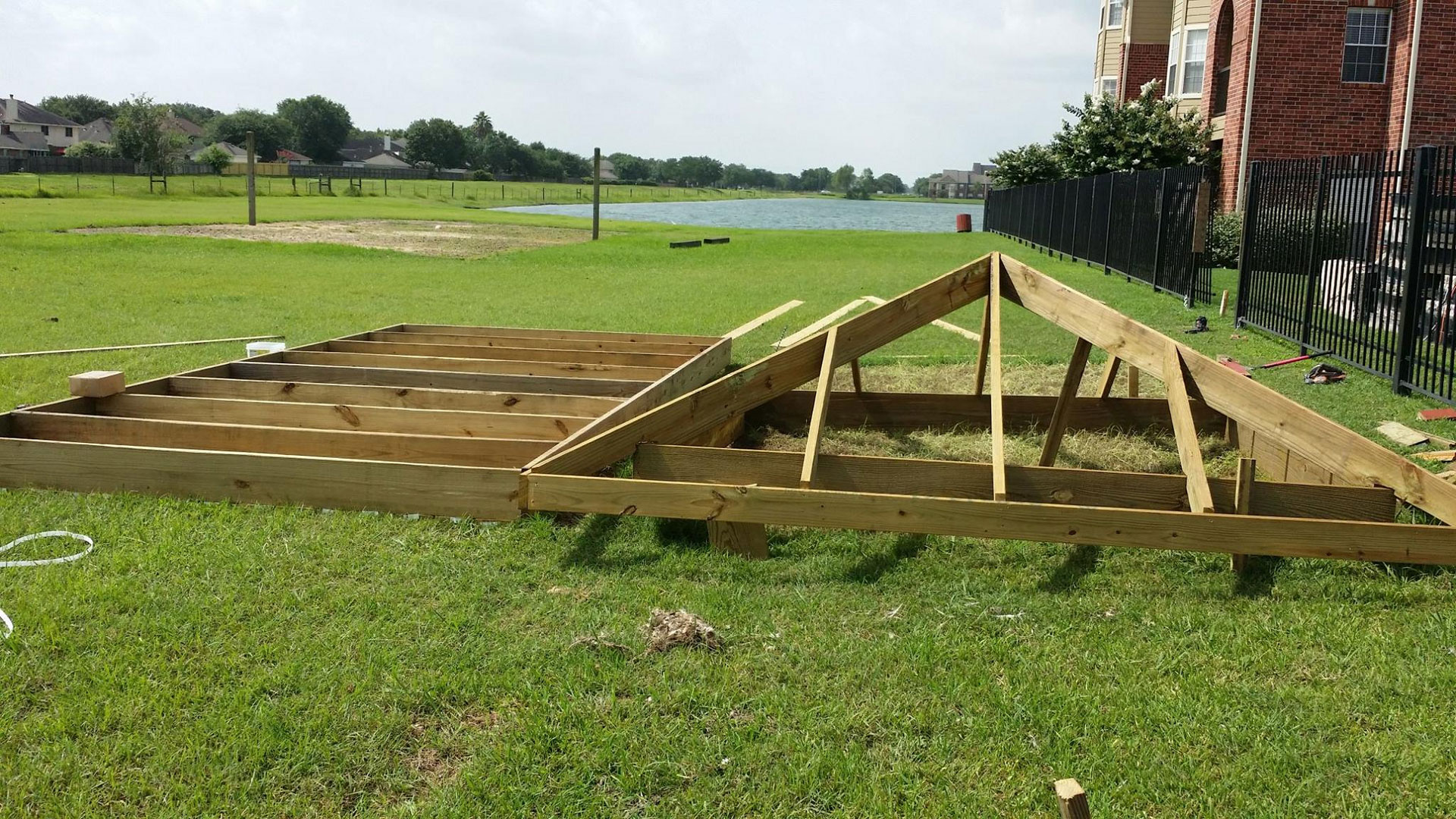
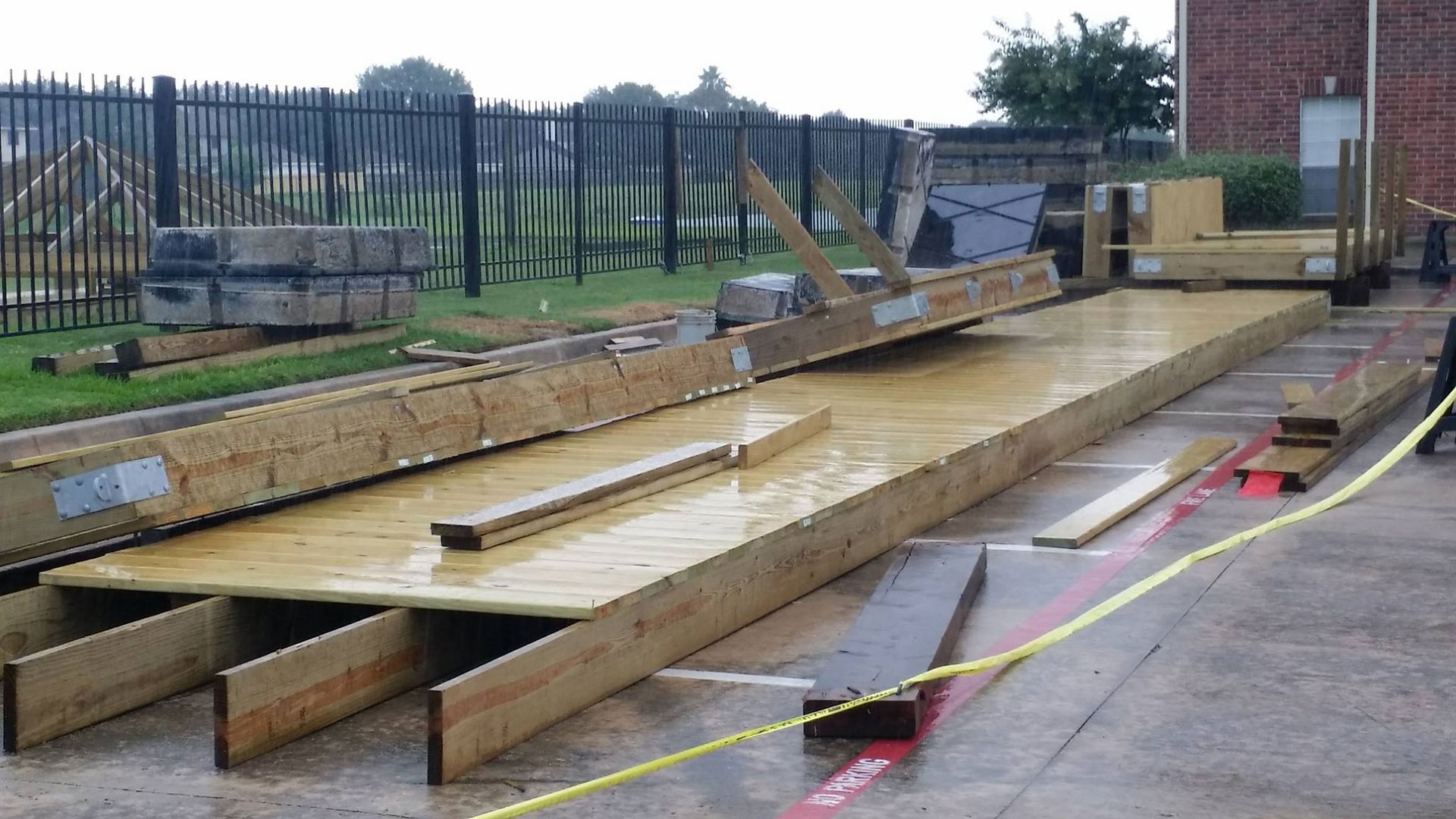
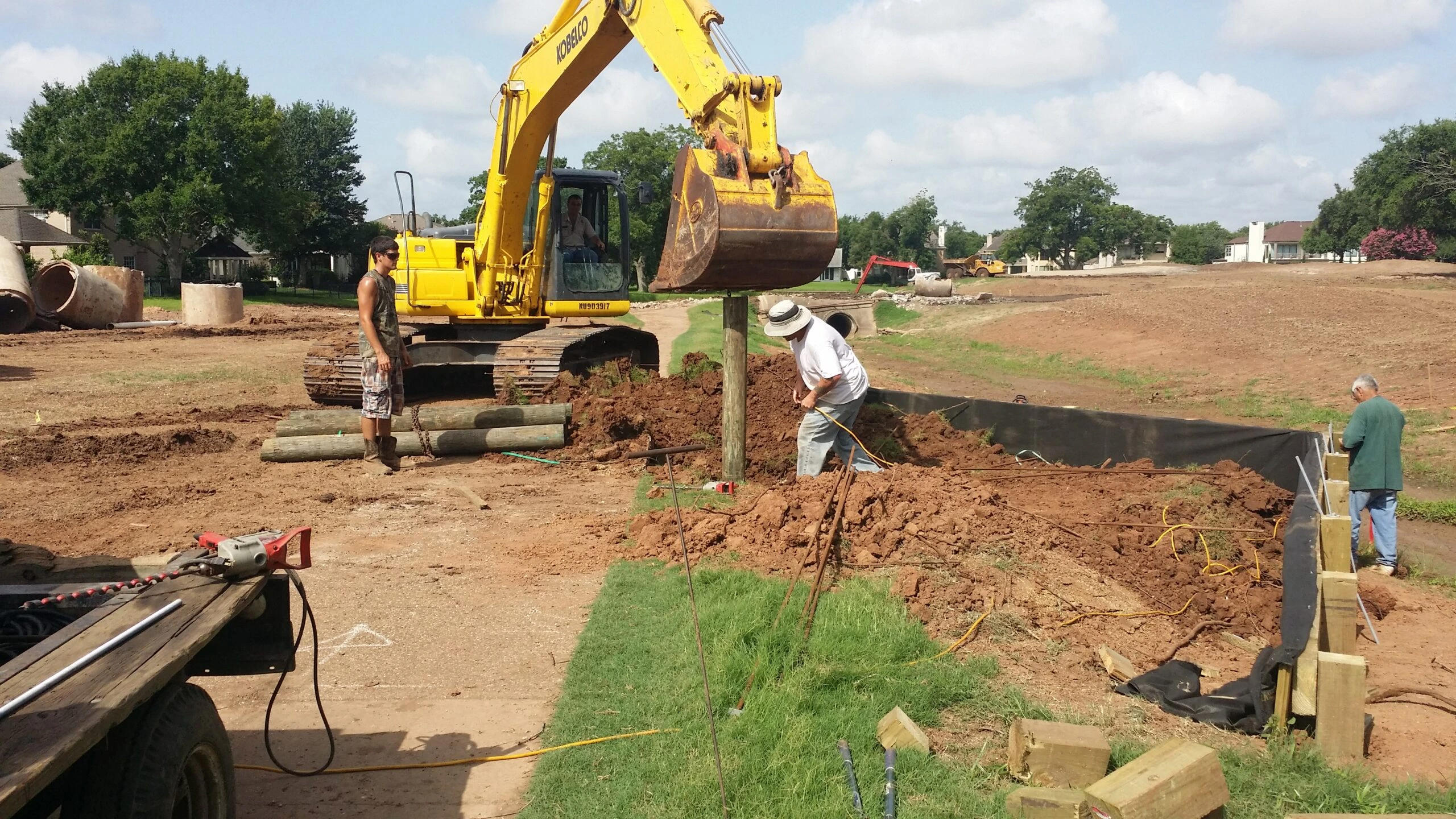
We drive marine-grade pilings to refusal for a foundation that holds, then frame with treated structural lumber sized for marine loads.
-
Decking & Finish
We install radius-edge decking, hardware, and any add-ons — boat lifts, steps, benches, lighting, or a boat house — then walk the finished structure with you.
Materials & Treatment Specifications
All framing materials and pilings are marine grade. We treat timber for its environment — 2.5 CCA for saltwater, .60 for freshwater, and .40 for land-contact use — so the structure resists rot, marine borers, and corrosion for decades. Decking is radius-edge 2x6 for a clean, splinter-resistant surface.
Why a Professionally Engineered Dock Outlasts a Handyman Build
The difference between a dock that lasts thirty years and one that racks, sags, or loses pilings in a decade is almost never the decking you can see — it is the foundation and framing you cannot. Piles that are pushed or jetted instead of driven to refusal work loose as lake levels cycle. Framing sized for a backyard deck flexes under wave and boat-impact loads it was never designed for. Fasteners rated for dry land corrode at the waterline within a few seasons. We engineer every dock for its actual site: water depth, bottom composition, seasonal level swing, prevailing wind fetch, and the boat traffic it will absorb.
Because Jordan Marine Construction runs its own barge-mounted and land-based pile-driving equipment, we control the single most important variable in dock construction — pile embedment — rather than subcontracting it out. Every piling is driven to refusal, verified for alignment, and only then framed. That is also why we can stand behind structures on high-traffic water like Lake Conroe, where weekend chop and wake loads punish under-built docks.
Materials matter just as much in Texas waters. Freshwater lakes like Conroe and Livingston call for .60 CCA-treated timber; brackish and saltwater exposure on Galveston Bay and the Gulf Coast requires 2.5 CCA treatment to resist marine borers that will eat unprotected wood from the inside out. Using the wrong retention level is one of the most common — and most expensive — mistakes we see in docks built by non-marine contractors.
Dock Types We Build: Fixed-Pile, Floating, and Hybrid Systems
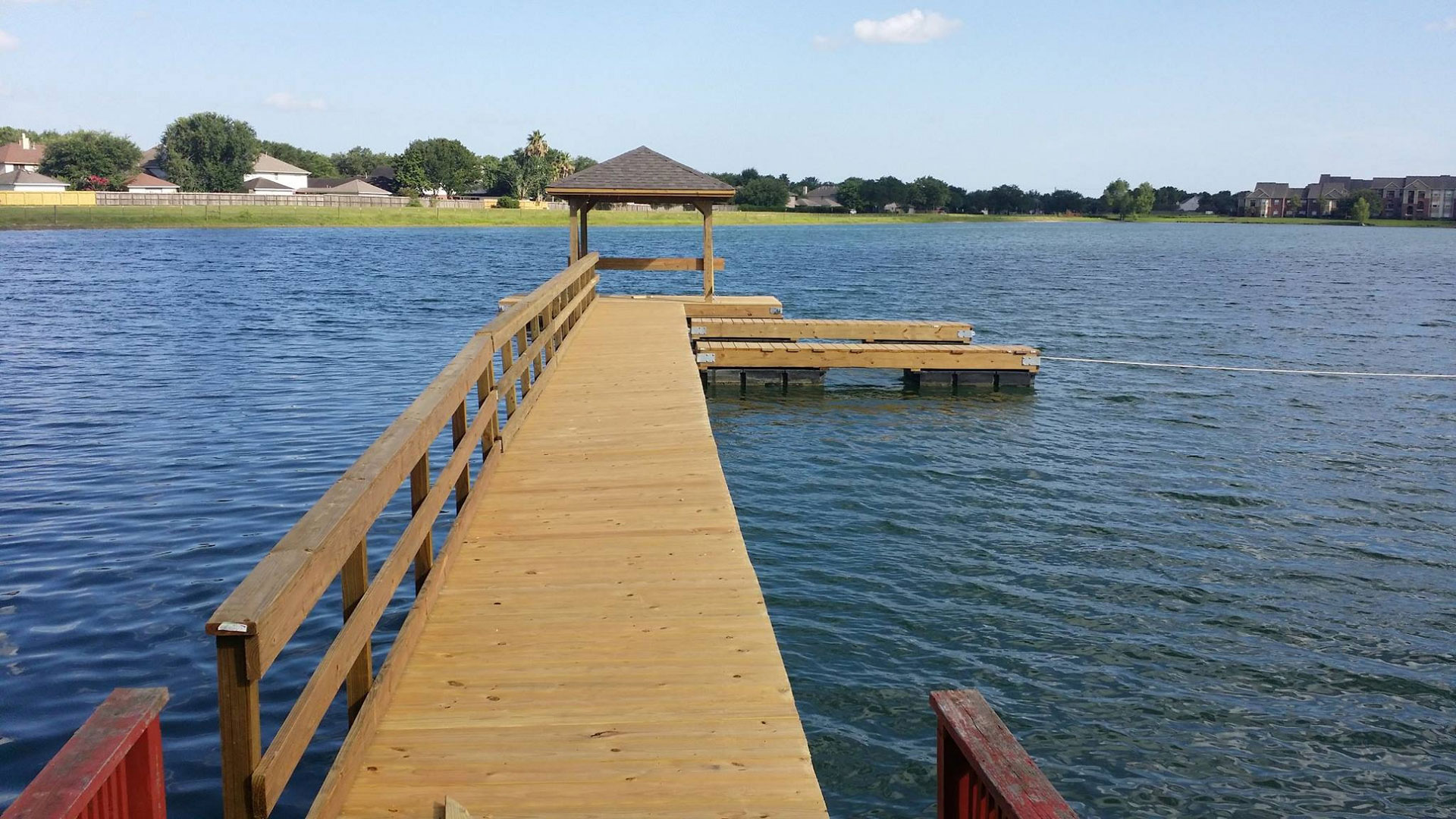
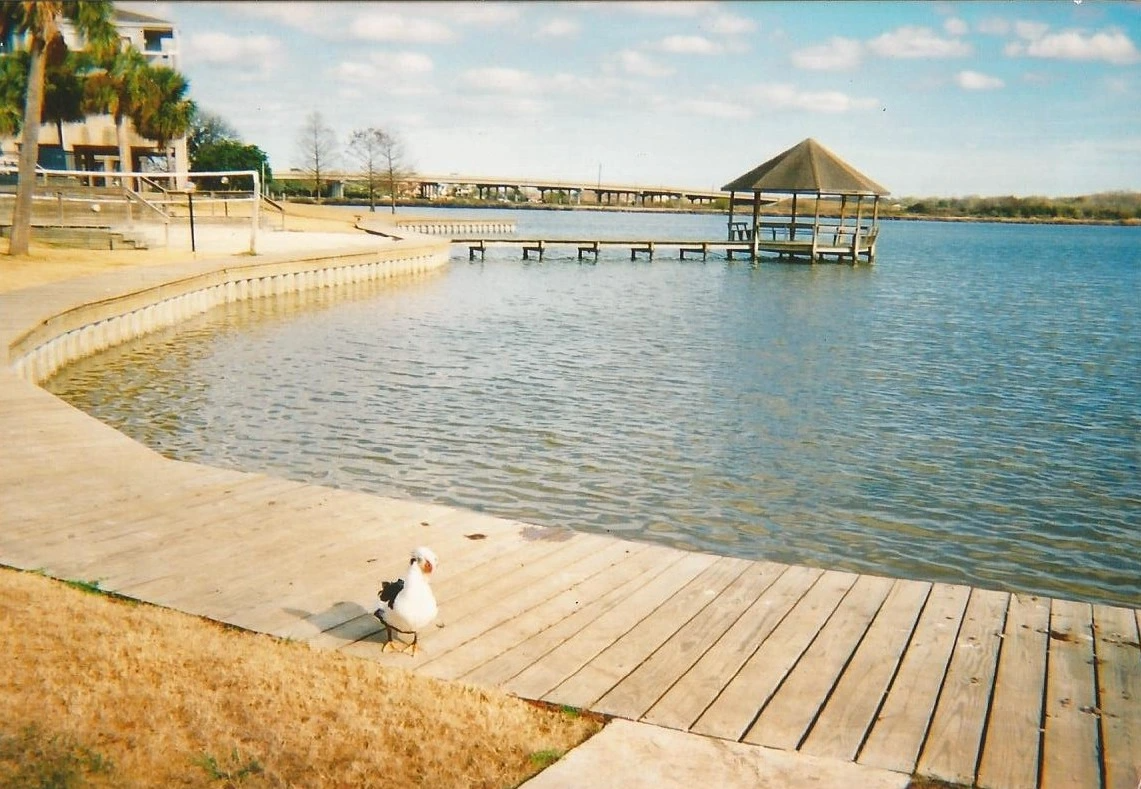
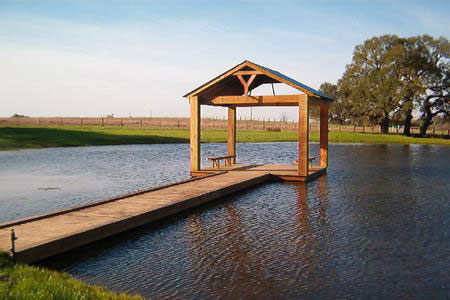
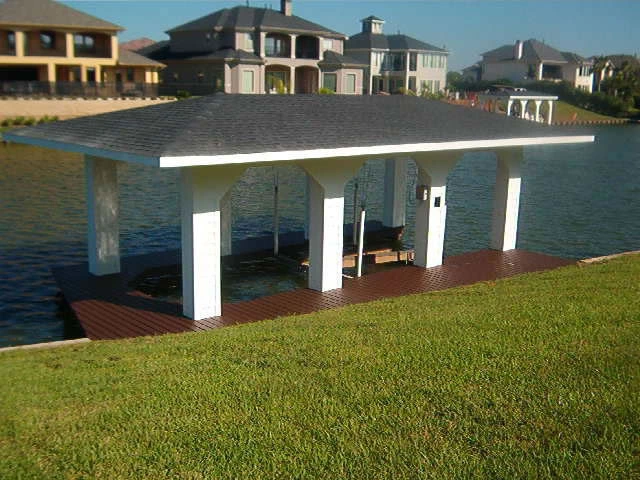
Fixed-pile docks are the workhorse of Texas lakes: pilings driven to refusal, treated structural framing, and radius-edge decking that stays put through storms and level swings. They are the right call for stable-depth shorelines, boat houses, lifts, and any structure that needs to carry real load. Most of our Lake Conroe and Lake Livingston work is fixed-pile.
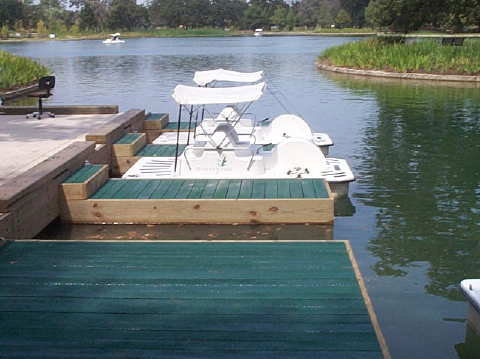
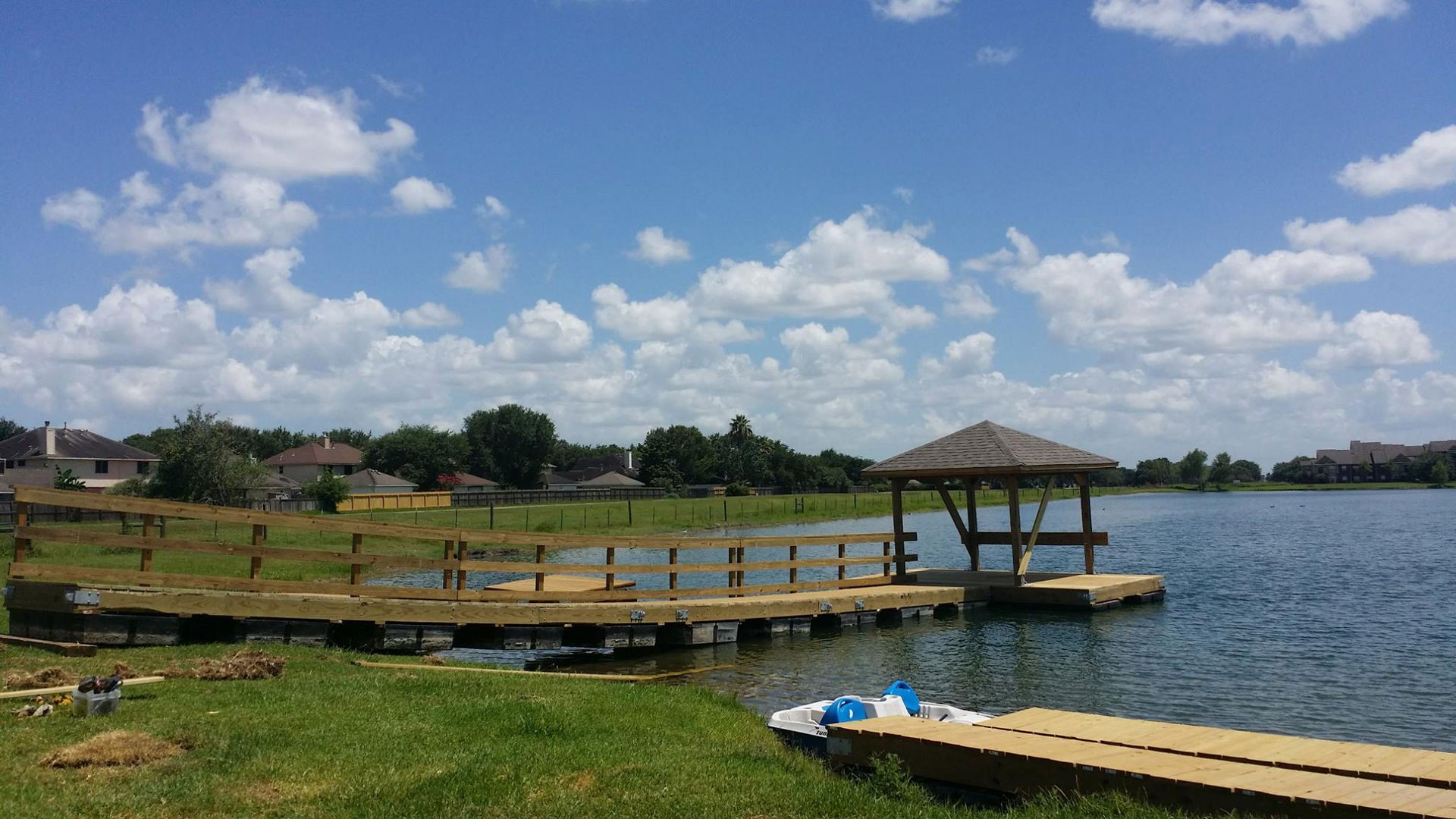
Floating docks ride on encapsulated flotation and adapt automatically to water-level changes, which makes them well suited to reservoirs with large drawdowns, deep water where piles are impractical, or marina-style layouts. We also build hybrids — a fixed pier to a floating section — that give you stable shore access plus a low-freeboard swim and board platform at the water.
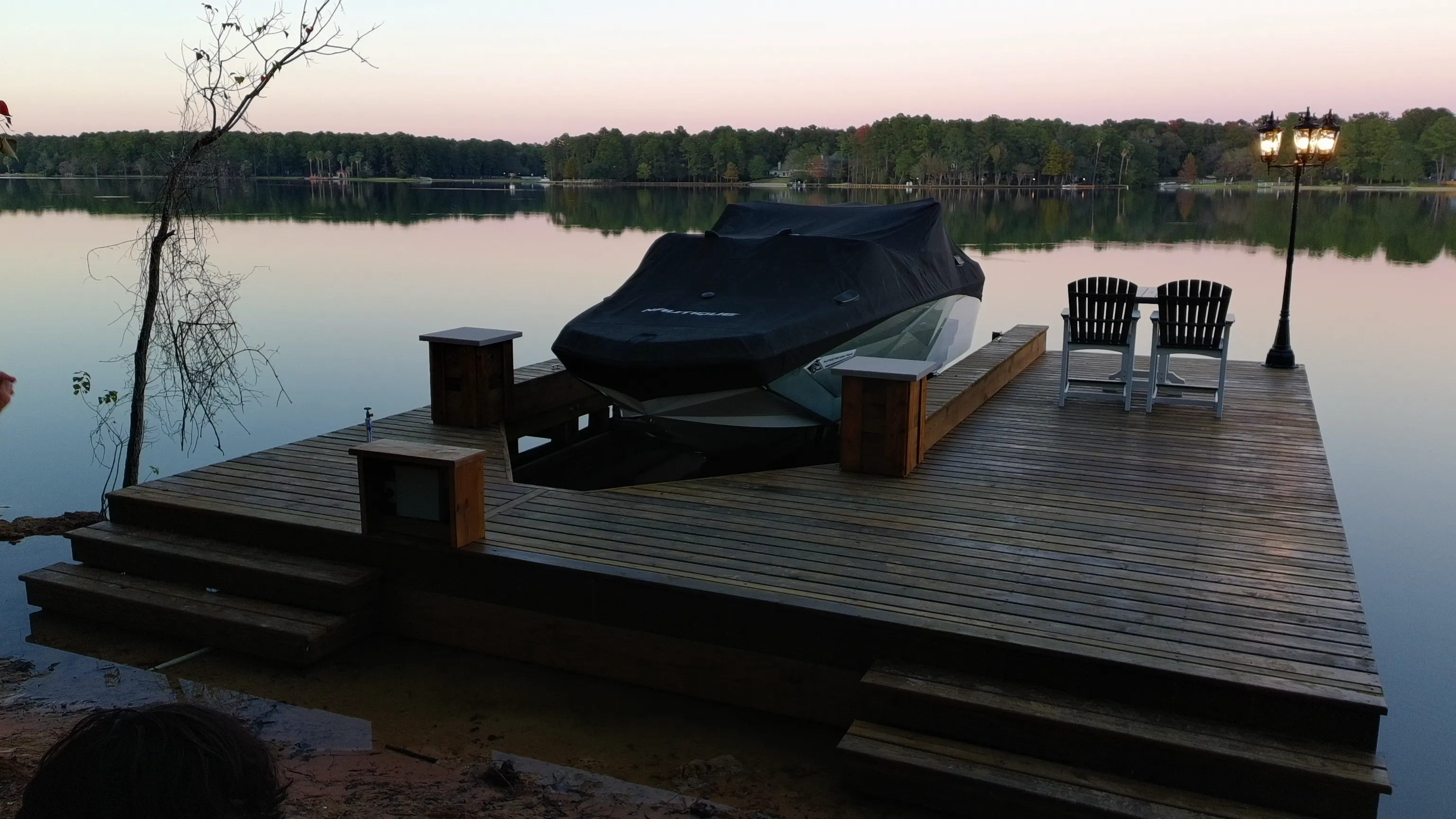
Beyond the platform itself, we integrate the full waterfront system in one build: boat lifts and PWC lifts, covered slips and boat houses, swim ladders, benches, fish-cleaning stations, lighting, and dock-to-bulkhead transitions. Designing these together — rather than bolting them on later — is what keeps load paths correct and the finished structure looking like one piece instead of an accumulation of add-ons.
Permitting a Dock in Greater Houston: SJRA, City of Houston, TRA & USACE
Every major waterbody in our region has a controlling authority, and building without the right permit can mean stop-work orders, fines, or forced removal. On Lake Conroe, docks and other over-water structures are permitted through the San Jacinto River Authority (SJRA), which reviews setbacks, dimensions, and encroachment onto the lake. On Lake Houston, the City of Houston governs pier permits. Lake Livingston structures go through the Trinity River Authority (TRA), and coastal work on Galveston Bay and the Gulf involves the U.S. Army Corps of Engineers Galveston District and the Texas General Land Office.
We handle this process for our clients start to finish — drawings, applications, and coordination with the authority — because we do it every month and know what each reviewer expects to see. It is one of the practical advantages of hiring a marine contractor who builds on these specific waters rather than a general contractor learning the process on your project.
Built for Texas Conditions: Heat, Hurricanes, and Fluctuating Lakes
Gulf Coast weather is the ultimate stress test for waterfront structures. Hurricane and tropical-storm events push surge, debris, and sustained wave action against everything at the waterline; the 100-degree Texas summer cycles decking through brutal expansion and UV exposure; and reservoir levels rise and fall with drought and flood-control releases. We design for all of it — pile embedment sized for storm loads, hot-dip galvanized and stainless hardware, framing connections that resist uplift, and deck heights set with real water-level history in mind.
That local knowledge shows up in small decisions that pay off for decades: how high to set a deck on a Conroe cove that sees two-foot seasonal swings, when a floating section makes more sense than fixed framing, how to orient a slip so the prevailing southeast wind doesn't work a moored boat against the structure. It is the kind of judgment that only comes from building — and repairing — hundreds of structures on the same waters.
Engineering Best Practices That Actually Make a Dock Last
A dock is only as good as the pilings you can't see and the hardware holding it together. The single biggest predictor of a dock's lifespan is pile embedment — which is why we drive every piling to refusal with a barge- or land-mounted hammer rather than jetting or pushing it to an arbitrary depth. On Lake Houston the City's building code sets a floor for this (private-pier piles at least 4 inches in diameter, embedded a minimum of 30 inches into firm soil), but firm-soil refusal on a wind-fetch cove often calls for far deeper embedment than the minimum, and that judgment is where engineering earns its keep.
Hardware is the second thing that separates a thirty-year dock from a ten-year one. We through-bolt structural connections with hot-dip galvanized bolts, washers, and nuts — and specify stainless where brackish water demands it — instead of relying on nails or coated screws that bleed rust within a few seasons. Framing is sized and braced for real loads: Houston's code calls for a minimum 50 psf live floor load on private piers and 100 psf on commercial, with diagonal 2×4 pressure-treated X-bracing on the bents, and we build to those numbers or better with hurricane-rated connections that resist uplift.
Materials are matched to the water, not to whatever is on the truck. Freshwater lakes like Conroe and Livingston call for .60 CCA-treated structural timber; brackish and saltwater exposure on Galveston Bay requires 2.5 CCA to resist the marine borers that hollow out unprotected wood from the inside. Decking can be treated southern yellow pine or a composite like MoistureShield for a splinter-free, low-maintenance sun deck — but the framing underneath is always environment-correct treated timber. Getting the retention level wrong is one of the most expensive mistakes we see on docks built by non-marine contractors.
Dock Power, Lighting, and Shock Safety: Built to NEC Article 555
Electricity and water are the most dangerous combination on any dock, and wiring is the detail budget builders skip. Electric shock drowning (ESD) — where stray current in the water paralyzes a swimmer — is a real and preventable hazard, and the National Electrical Code addresses it directly in Article 555, which governs marinas, boatyards, and docking facilities. Dock receptacles must be GFCI-protected, metal parts bonded, and equipment grounding carried correctly so a fault trips the breaker instead of energizing the water.
When we build a dock with lighting, receptacles, a boat lift, or shore power, that wiring is installed to NEC Article 555 practice: ground-fault protection, proper bonding and grounding, weather- and corrosion-rated fittings, and clear labeling. It is not an upsell — it is the difference between a dock that is safe to swim near and one that is a hidden liability. If your existing dock has ungrounded outlets or a lift wired without GFCI protection, that is worth correcting before anyone is in the water around it.
Lighting is both a safety and a livability feature. Piling-cap, deck-perimeter, and step lighting keep the structure visible and usable after dark, and the City of Houston code even requires amber warning reflectors on Lake Houston piers — 3-inch minimum lenses, no more than 8 feet apart, set 18 inches above spillway elevation — so the dock is visible to boaters at night. We integrate the electrical, lighting, and reflector requirements into the build instead of bolting them on afterward.
Local Codes & Engineering Specifications for Docks & Piers
A dock or pier in the greater Houston metro is a permitted, engineered structure — not a weekend build. The authority that governs each waterbody sets the rules, and on most waters a Texas-licensed professional engineer's seal is required. Here are the actual specifications we design and build to, with citations. Lake Houston piers are codified in the City of Houston Building Code; Lake Conroe structures run through the San Jacinto River Authority; coastal work adds the U.S. Army Corps of Engineers, Galveston District, and the Texas General Land Office.
City of Houston — Lake Houston Piers (Building Code, Chapter 62)
Every pier must be designed by and bear the seal of a Texas-licensed professional engineer (§6201.1), and requires a City permit plus an annual license (Code of Ordinances, Chapter 23, Article IV, Division 2). Private piers may be no more than 8 ft wide, must sit at least 5 ft from property lines, and may not project closer than one-third of the way across the waterway (§6202.1.1).
- §6202.2.1 Private-pier piles: minimum 4 in. diameter, embedded at least 30 in. into firm soil — we drive to refusal, which is usually deeper.
- §6202.2.3 Ledgers: minimum 2×6 nominal, fastened with at least two ½ in. galvanized bolts at each connection.
- §6202.2.4 Stringers: minimum 2×8 nominal, spaced no more than 3 ft on center.
- §6202.2.5 Decking: minimum 2×6 No. 2 grade with ¼–1 in. gaps, set at least 2 ft above spillway elevation (44½ ft), two 16d galvanized nails at each bearing.
- §6202.1.6 Design loads: minimum 50 psf live floor load for private piers, 100 psf for commercial, with wave pressure figured at P = 125h²(tan θ).
- §6202.1.5 Warning devices: amber or yellow reflectors with 3 in. minimum lenses, no more than 8 ft apart, 18 in. above spillway elevation.
Lake Conroe — SJRA & Coastal — USACE / Texas GLO
On Lake Conroe, docks and other residential structures are licensed through the San Jacinto River Authority (Lake Conroe Division), which requires a current survey by a Registered Professional Land Surveyor. Coastal and bay work on Galveston Bay and the Gulf is permitted through the U.S. Army Corps of Engineers, Galveston District (Section 10/404) and the Texas General Land Office. We prepare the drawings and applications and coordinate the reviews.
Sources & Official References
Specifications above are summarized from the referenced codes as of July 2026 and are provided for planning. Every project is engineered and permitted to the current requirements of the authority having jurisdiction.
Related Projects

Where We Build Docks & Piers
We build docks & piers for waterfront communities across Greater Houston, Lake Conroe, Lake Livingston, and the Texas Gulf Coast. A few of the areas we serve:
Don't see your area? View all service areas or contact us.
Docks & Piers FAQs
How long does it take to build a dock?
Most residential docks are completed within 2–6 weeks once permitting clears, depending on size, water conditions, and weather. We provide a firm timeline during your consultation.
Do I need a permit to build a dock on Lake Conroe?
Yes. Docks on Lake Conroe are permitted through the San Jacinto River Authority (SJRA). On Lake Houston the City of Houston governs pier permits, and coastal projects go through the USACE Galveston District and the Texas GLO. We handle the permitting process for you.
Fixed pile or floating dock — which is better?
It depends on your water-level swing. Fixed-pile docks are ideal for stable depths and heavier use; floating docks adapt to large level changes. We recommend the right system after assessing your site.
Can you add a boat lift or boat house later?
Yes. We design docks so lifts, covered slips, and boat houses can be added cleanly, and we install all of them in-house.
How much does it cost to build a dock in the Houston area?
Dock cost depends on size, water depth, bottom conditions, dock type (fixed-pile vs. floating), decking material, and add-ons like lifts or covered slips. A small straight-walk pier is a very different project from a boat house with two slips and a sun deck. We provide free, itemized estimates so you can see exactly where the budget goes before committing.
What is the best decking material for a boat dock in Texas?
Treated radius-edge 2x6 timber is the proven, cost-effective standard. Composite decking such as MoistureShield adds fade, splinter, and maintenance resistance and is an excellent upgrade for bare-foot sun decks. Framing underneath should always be environment-treated timber regardless of the deck surface — 2.5 CCA for saltwater, .60 for freshwater.
How deep do dock pilings need to be?
There is no single depth — embedment depends on bottom composition, water depth, and the load the structure carries. That is why we drive every piling to refusal (the point where soil resistance stops the pile) rather than to an arbitrary depth. Piles that are jetted or pushed instead of driven are the leading cause of leaning, racking docks.
Can you replace my old dock, or build on my existing pilings?
Yes to both, when the existing foundation is sound. We assess pilings for rot, borer damage, and embedment first. If they can carry the new structure we build on them; if not, we tell you honestly and price the replacement. Reusing compromised pilings under a new dock is a false economy we won't sell you.
Do you build community and HOA piers, not just residential docks?
Yes. We build for HOAs, POAs, lake communities, marinas, and commercial waterfronts as well as homeowners — including multi-slip structures and community piers. Our current work includes a community-wide bulkhead replacement contract for the Hillshire Lakes POA.
What maintenance does a dock need in Texas?
Inspect annually: check pilings at the waterline, tighten or replace corroded fasteners, look for framing rot at connection points, and re-seal or re-stain wood decking every 2–3 years. Catching a $200 hardware issue early prevents a $10,000 framing repair later. We also perform dock inspections and repairs if you'd rather have a professional eye on it.
Do I need a permit and an engineer to build a dock on Lake Houston or Lake Conroe?
Almost always yes. On Lake Houston the City of Houston requires a permit and an annual license, and every pier must be designed by and bear the seal of a Texas-licensed professional engineer (Building Code Chapter 62). On Lake Conroe, docks are licensed through the SJRA with a current RPLS survey. Coastal work adds the USACE Galveston District and the Texas GLO. We handle the drawings, applications, and coordination as part of the project.
How high should a dock deck sit above the water?
High enough to clear seasonal swings, wake, and storm surge — and on Lake Houston the code sets a floor of at least 2 feet above spillway elevation (44½ ft). On reservoirs like Conroe that see two-foot seasonal swings, we set deck height from real water-level history so you're not underwater in a wet year or reaching down in a dry one. A floating section is sometimes the better answer where drawdown is large.
What makes dock electrical safe around swimmers?
Dock power has to be built to NEC Article 555: GFCI protection on receptacles, correct bonding and grounding, and corrosion-rated fittings, so a fault trips the breaker instead of energizing the water. That is what prevents electric shock drowning (ESD). If your dock has ungrounded outlets or a lift wired without GFCI protection, have it corrected before anyone swims near it.
Can you build a commercial or HOA pier, not just a private dock?
Yes. Commercial and community piers carry a higher design load (100 psf vs. 50 psf for private under Houston's code), can be wider, and often add marina electrical and lighting — all of which we build to code. We currently hold a community-wide bulkhead contract for the Hillshire Lakes POA and build for HOAs, marinas, and commercial waterfronts as well as homeowners.
Related Services
Get a Free Docks & Piers Estimate
Tell us about your project and we'll provide a detailed, no-obligation estimate. Serving Greater Houston, Lake Conroe, Lake Livingston, and the Texas Gulf Coast.