

Shoreline erosion quietly eats away at waterfront property — losing yard, undermining structures, and threatening foundations. Jordan Marine Construction designs and installs erosion-control solutions across Greater Houston, Lake Conroe, Lake Livingston, and the Texas Gulf Coast, matched to the cause and severity of the problem.
From bulkheads and seawalls to riprap, retaining walls, and engineered soil-retention systems, we assess what is driving the erosion at your site and install the right combination to stop it for good.
Request Your Free EstimateOur Erosion Control Process
-
Erosion Assessment
We identify what is driving the erosion — wave action, runoff, water-level swing, or poor soil retention — before recommending a solution.
-
Solution Design
We design the right mix of bulkhead, riprap, retaining wall, or engineered soil retention for your shoreline.
-
Installation
We install the system with proper foundations, drainage, and backfill for lasting protection.
-
Restoration
We restore grade, sod, and landscaping so the shoreline is protected and finished.
An Engineered Approach to Erosion
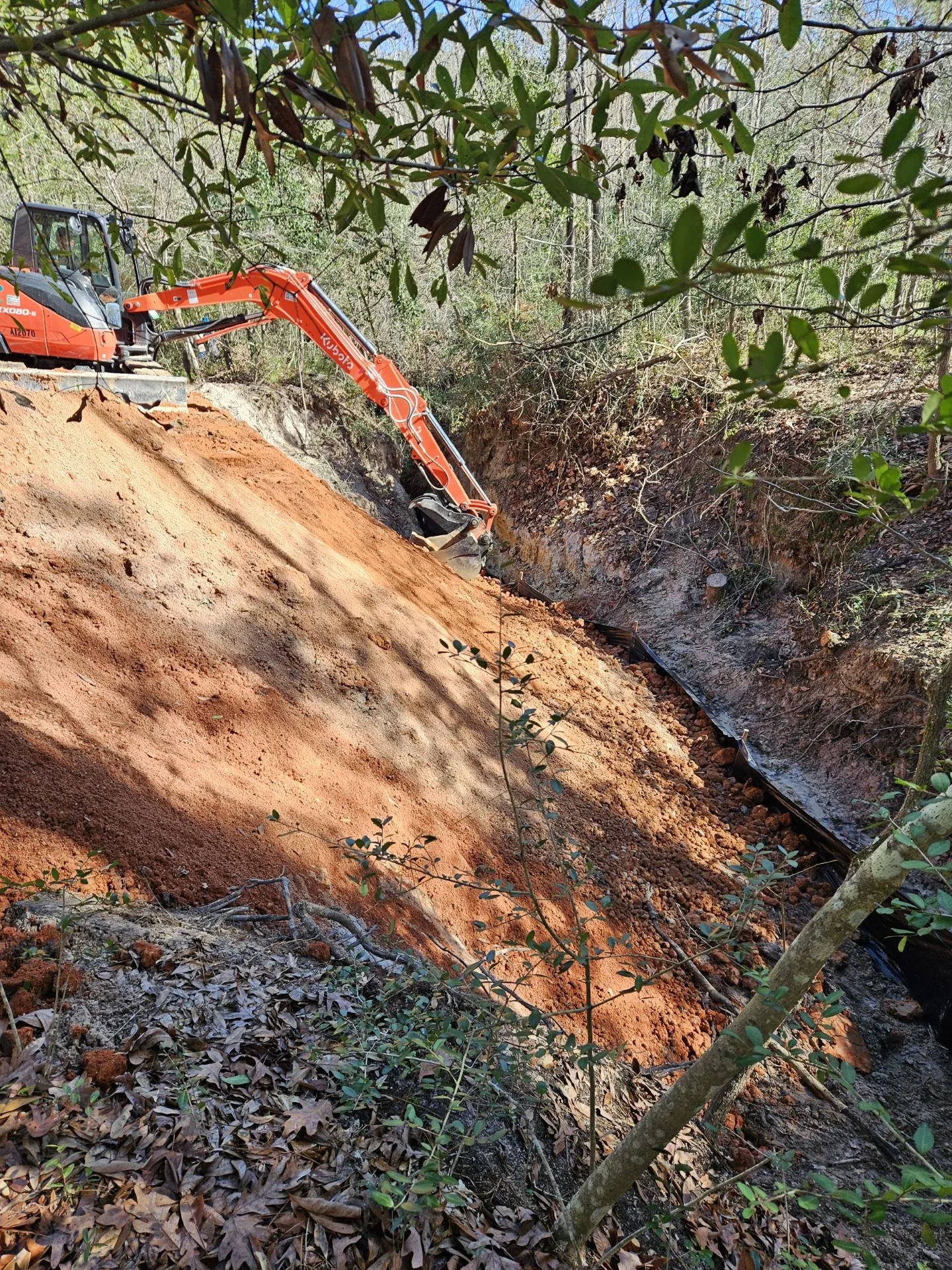
Effective erosion control treats the cause, not just the symptom. Depending on your site we combine driven bulkheads or seawalls, riprap armor stone, engineered retaining walls, and soil-retention systems with proper drainage and backfill. We have real, proven experience — including a completed engineered soil-retention project on a Texas lakefront.
Erosion Has a Cause — Effective Control Starts by Naming It
Shoreline erosion is a symptom with several distinct diseases, and matching the fix to the actual cause is the entire game. Wave and wake energy chews banks from the waterline up — the classic Lake Conroe weekend-traffic problem. Stormwater runoff cuts from the top down, gullying slopes and carrying soil into the lake with every downpour. Water-level fluctuation cycles the bank between saturated and dry, collapsing it progressively. And on the coast, tide and surge add energy that inland shorelines never see. Each driver calls for a different system, and mismatched fixes fail: a bulkhead won't stop runoff gullying behind it, and vegetation alone won't stop wake erosion at the toe.
Our erosion assessments read the evidence at your site — where the bank is retreating, what the scarp looks like, where sediment ends up, how the drainage above behaves — and identify the driver before recommending anything. The right answer is frequently a combination: armor at the waterline, retention on the slope, drainage control above.
That system-level approach is what we're built for, because we install every layer: driven bulkheads and seawalls, riprap armor, engineered retaining walls, and soil-retention systems, with the drainage detailing that makes them work together. One contractor, one design, one accountable result.
The Toolkit: Armor, Walls, Retention, and Drainage
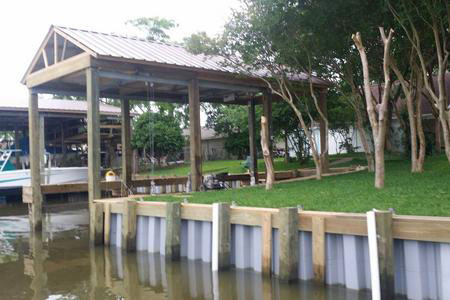
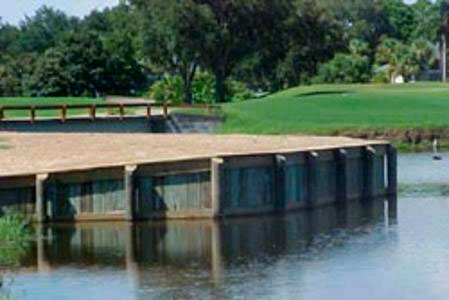
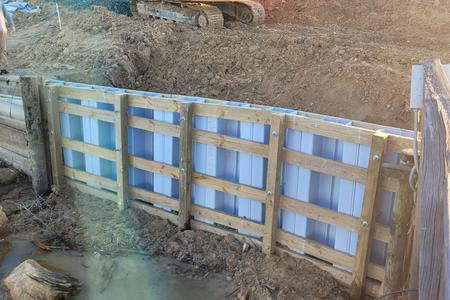
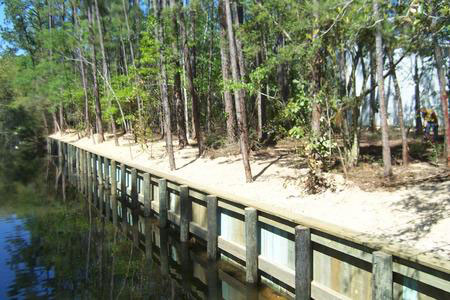
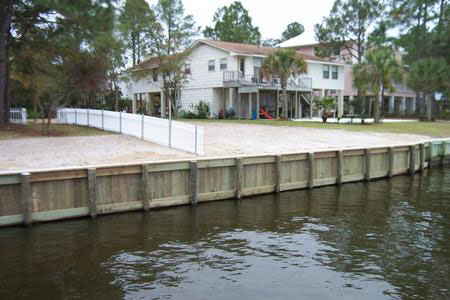
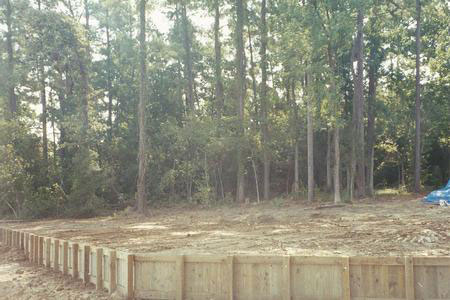
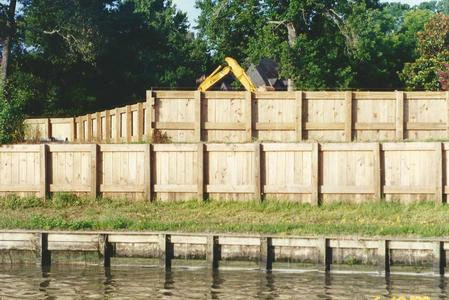
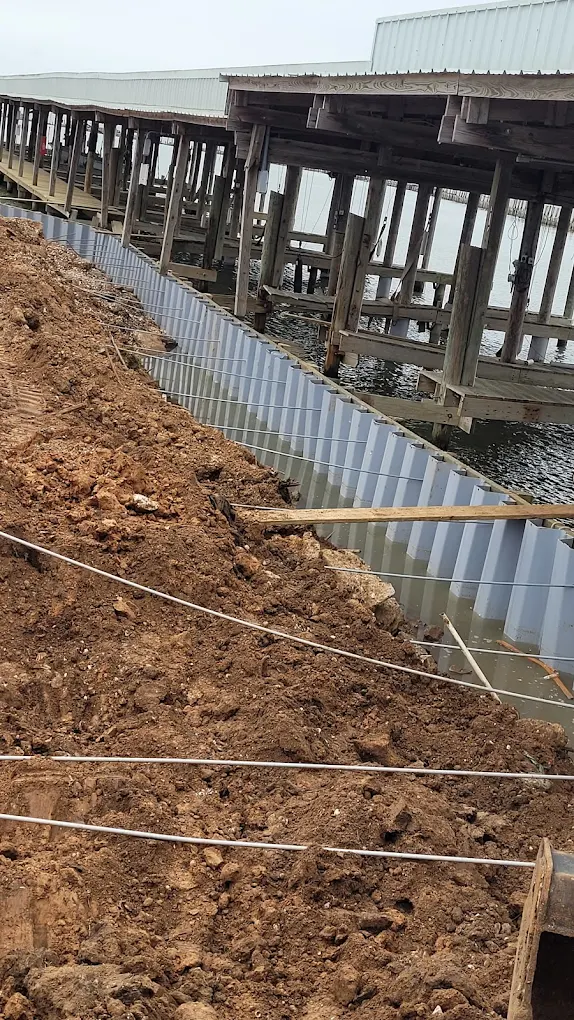
At the waterline, wave-driven erosion calls for armor or a wall: riprap — graded stone over filter fabric — absorbs wave energy on sloped banks and looks natural doing it, while vertical or high-energy shorelines call for a vinyl, timber, or steel bulkhead driven to engineered embedment. Riprap at a bulkhead's toe is a common pairing, protecting the wall's foundation from scour.
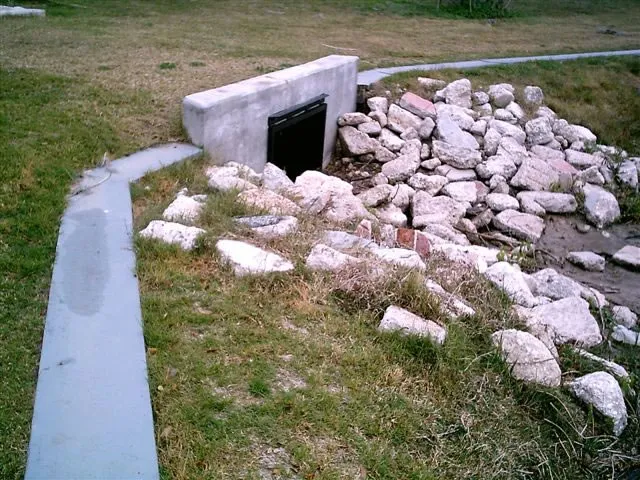
On the slope, engineered soil retention holds grade where a full wall would be overkill: erosion-control pavers, gravel-filled grid systems, and geotextile reinforcement that lock soil in place while letting vegetation establish — an approach we've proven on completed Texas lakefront projects. Above the slope, drainage control finishes the system, intercepting and directing the runoff that would otherwise cut the bank from the top.
Erosion work at the water's edge often triggers permitting — SJRA on Lake Conroe, TRA on Lake Livingston, City of Houston on Lake Houston, USACE and the Texas GLO on coastal shorelines. We handle the permits as part of the project, and finish every installation with restored grade and sod so the shoreline is protected and finished, not just armored.
Related Projects
Where We Build Erosion Control
We build erosion control for waterfront communities across Greater Houston, Lake Conroe, Lake Livingston, and the Texas Gulf Coast. A few of the areas we serve:
Don't see your area? View all service areas or contact us.
Erosion Control FAQs
What is the best erosion-control method for my property?
It depends on the cause and severity. Wave-driven erosion often needs a bulkhead or riprap; runoff and slope issues may need retaining walls and engineered soil retention. We assess and recommend the right combination.
Do you handle permitting for erosion-control work?
Yes. We coordinate permits with the relevant authority — SJRA, City of Houston, or USACE/GLO on the coast.
How much shoreline am I actually losing to erosion?
Texas lake and bayou banks commonly retreat inches to feet per year once erosion is active — and the rate accelerates, because each loss steepens the bank and exposes fresh soil. Comparing old photos or survey markers tells the story quickly. The economic answer is almost always to stabilize before the next big-rain year, not after.
What's the most cost-effective erosion control for a lake lot?
It depends on the driver. For wake-driven toe erosion on a sloped bank, riprap is often the value leader. For vertical banks, a vinyl bulkhead. For runoff-driven slope loss, engineered soil retention beats building a wall the site doesn't need. Our assessment identifies the driver first, so you don't buy the wrong fix.
Can I just plant vegetation to stop erosion?
Vegetation helps hold slopes against runoff and sheet flow, and it's part of good finished work — but roots can't stop wave and wake energy at the waterline or arrest an actively slumping saturated bank. Established erosion usually needs structure at the toe first; planting then protects and finishes the stabilized grade.
Do I need a permit to armor my shoreline?
At the water's edge, usually yes — the controlling authority (SJRA, TRA, City of Houston, or USACE/GLO on the coast) reviews shoreline armoring and walls. Upland slope work is often outside their jurisdiction. We determine what applies to your specific site and manage the process.
My neighbor's bulkhead is making my erosion worse — is that real?
It can be. Wave energy reflecting off a neighboring hard wall concentrates on the unprotected bank beside it — a known 'flanking' effect at the ends of bulkhead runs. It's one of the most common reasons adjacent owners armor in sequence, and we design tie-ins to neighboring walls to close those gaps cleanly.
Related Services
Get a Free Erosion Control Estimate
Tell us about your project and we'll provide a detailed, no-obligation estimate. Serving Greater Houston, Lake Conroe, Lake Livingston, and the Texas Gulf Coast.